
|
This work is licensed under a
Creative Commons Attribution-Noncommercial-Share Alike 3.0 License. |
|
|
This work is licensed under a
Creative Commons Attribution-Noncommercial-Share Alike 3.0 License. |
by Adrian Duncan
 |
||
|
Click on images to view larger picture,
hover over the images for a description. |
||
Here we undertake the somewhat daunting task of attempting to summarize the story of one of the better-known post-war British model engine ranges—the E.D. marque. There can be few British and Commonwealth modellers who were active in the Golden Age of aeromodelling in the 1950's and early 1960's who did not have direct experience with the products of the E.D. company. Accordingly, it's well worth preserving an accessible record of their history.
Before getting started, it's both a duty and a pleasure to acknowledge the fact that it would be quite impossible to write with any authority on the subject of E.D. and their products without drawing upon the wealth of knowledge and experience of this marque held by my good mate Kevin Richards. Since there's no question at all that Kevin is the world authority on E.D., I freely admit that I wouldn't have even begun this write-up without being assured of his willingness to advise and assist at many points along the way when I found myself stumbling! Kevin's forthcoming book about the E.D. enterprise will doubtless represent the last word on that subject. In the meantime, this article will have to do...
I'd also like to pay tribute to Ron Reeves, who made a very worthy first stab at writing up this very complex story for MEN readers. Although a lot more information has since become available and many parts of Ron's tale can now be amended or augmented, his much-appreciated effort was instrumental in stimulating my own interest in this fascinating tale.
Finally, Ron Chernich was as ever always willing to do that little bit of extra digging for references which eluded me. We're all very fortunate to have Ron as our Editor, but I'm even more fortunate to have him as a friend.
With these acknowledgements on the table, it's time to get started! However, before we consider the range of products emanating from E.D. it's necessary first to delve a little into the origin and background of the enterprise.

The registered name of the original company which manufactured the E.D. range was Electronic Developments (Surrey) Ltd. This company appeared on the scene in 1946 shortly after the end of World War II, having been formed by a group of individuals who had for the most part worked during the war years for the Parnall Aircraft Company in Yate, Gloucestershire.
During the war, Parnall had been engaged in making the Frazer-Nash gun turrets used in the RAF's Wellington, Manchester, Stirling and Lancaster bombers. However, Ministry contracts were naturally terminated following the cessation of hostilities and large numbers of former Parnall employees were laid off. This somewhat ruthless process of downsizing allowed the Parnall company to survived the early post-war retrenchment, and they subsequently become renowned for their washing machines and their Jackson range of cookers.
However, that came later—in the interim, the redundant employees of the Parnall enterprise had to earn their livings somehow! Times were hard, which makes it all the more impressive to learn that a number of the now unemployed individuals elected to participate in what amounted to a collective leap of faith. Under the managing directorship of Jack E. Ballard, some 65 individuals each contributed £50 to finance the start-up of the new Electronic Developments (E.D.) enterprise. The £50 commitment represented a very sizeable investment for an unemployed working man in 1946, when a person earning £8 per week was considered to be well-off. Each individual stake in the business was roughly equivalent to around three thousand dollars in today's money (2012).
The company was thus established very much along the lines of a worker's co-operative—all of the employees had a financial stake in the company. In addition, the fact that many employees already had a history of working together as a team at Parnall must have paid dividends during the early years in terms of the camaraderie and team spirit which likely existed from the outset.

The new company established its workshops in premises located in the south-west area of Greater London at 18 Villiers Road in Kingston-on-Thames, Surrey. The ex-Parnall employee/shareholders therefore had to relocate from Gloucestershire to the London area, further underscoring the magnitude of the leap of faith on their part which their investment represented. According to later reports, the floor area of the new premises was around 4,500 square feet. Villiers Road still exists today, but 18 Villiers Road has been completely re-developed for residential purposes, eradicating all traces of the former industrial activity at the site. It is however possible that the much-altered red-brick building on the site did at one time house the E.D. manufacturing facilities.
It will doubtless come as a surprise to many readers to learn that when the E.D. company was formed, its original purpose had nothing whatsoever to do with models! The intention at the outset was to produce electronic hearing aids for the many servicemen who had returned from WW2 with damaged hearing, war being the noisy business that it is. The name of the company confirms that the electronic side of the business was viewed at the outset as the primary activity—no mention of engines there!
However, for reasons which are now lost in the mists of time the original plan was quickly abandoned. Instead, the new company quickly shifted its focus towards model-related production, presumably on the basis of a personal interest in this field on the part of some of the founding Directors. Model radio control equipment was then in its infancy and still highly experimental, and E.D.'s early involvement with this field was a direct offshoot of their original interest in electronic equipment. It was only natural that this modelling focus would quickly lead to what was seen at the outset as a subsidiary interest in model engines.
Jack Ballard's management team included such then-famous names as George Honnest-Redlich, noted pioneering author on the subject of radio control for models. In addition to his duties as a Director, Honnest-Redlich was in charge of the technical side of the radio control development program. Bill Wedlock was workshop foreman, with Bert Day the expert on honing cylinders and radio assembly. Completing the executive team were Doug Fifield and Jim Donald, both with a strong model engineering background. The remaining staff served the company in various capacities as working shareholders.

The name of Basil Miles has always been closely associated with the design of the engines produced by E.D., at least in the minds of many modellers from the "classic" era. This being the case, it's interesting to note that Basil's name is conspicuous by its absence from any known listing of the company Directors—indeed, he appears never to have held a managerial position within E.D. at any time. It seems probable that he became associated with the company somewhat later than many people have hitherto believed and that his role was strictly confined throughout to the field of engine design. In fact, much if not all of his association with E.D. may well have had a contractual basis, with Miles acting as an outside design consultant. Moreover, he does not appear to have had any involvement at all at the outset—the first E.D. product with which Miles' name was openly associated was the 2.46cc E.D. Mk III Racer introduced in March 1951, although it does appear that he may have had a role in the design of the 3.46cc E.D. Mk IV, with which he is pictured in the attached illustration. More of this in its place...
The newly-formed enterprise quickly identified a two-fold set of model-related goals—firstly, to develop and produce a range of commercial radio control equipment that would encourage increased modeller participation in this then-new field of model flying activity; and secondly, to develop and produce a range of model engines that would provide dependable power for models using E.D.'s radio control gear as well as for other modelling applications. At the outset, the manufacture of model engines was seen as a subsidiary activity, but this was to change as the years went by.
On the production front, the company was equipped at the outset with used wartime tooling which the cessation of hostilities had made redundant from Hawker Siddley (makers of the famous Hurricane fighter). The purchase of this equipment at auction for a particularly advantageous price was certainly a cost-effective approach to the start-up of a new business having limited capital. However, it was to prove highly problematic in later years since the machinery became both well-worn and out-of-date as the 1950's wore on, and by then E.D. lacked the resources to undertake the necessary wholesale upgrades. A number of other post-war British manufacturers were to fall victim to the vicious circle which this situation created.
One advantage enjoyed by the company was their location in close proximity to a number of scrap yards which at that time were unusually well stocked with redundant war-related materials suitable for small-scale engineering projects. In addition to high quality steel, there were non-ferrous materials such as aluminium alloy sheet from second-hand Heinkels along with a ready supply of used Rolls-Royce Merlin pistons, apparently perfect for the aluminium castings used in model engines.
Perhaps the most informative way to document the progression of the E.D. range is to follow their advertising placements in the two major British modelling magazines at the time—Aeromodeller and Model Aircraft. We will therefore present a number of these adverts as illustrations, interspersed with images of the engines themselves.
E.D. began to develop their range of commercial compression ignition engines in mid 1946, quite soon after the formation of the company. Their initial effort was a somewhat primitive sideport model known simply as the E.D. 2cc diesel. Reports in the contemporary modelling media indicate that examples of this engine began to appear on flying fields in southern England in December 1946 with little or no commercial fanfare. Kevin Richards believes that this original model was never offered for public sale and that the engines seen in action in late 1946 were development prototypes in the hands of E.D. employees. This seems entirely plausible to me in the current absence of any convincing evidence to the contrary.
We noted earlier that although it has been widely assumed in the past that Basil Miles was the E.D. engine designer from the outset, this is in fact very far from certain. In his April 1955 announcement of the then-forthcoming J.B. model engine range, Jack Ballard claimed that J.B. designer Charlie Gray had been "primarily responsible for all the engines manufactured by me (Ballard) during the past ten years". While this was clearly a gross misrepresentation of the facts since it completely ignored the very significant contributions of Basil Miles, Dennis Allen and Ted Martin, it may nonetheless have had some factual basis. It seems possible that Charlie Gray may have been responsible for the early E.D. models—certainly, their design represented a significant step backwards from the far more sophisticated designs which had been produced by Basil Miles prior to and immediately following WW2. Hence it seems highly unlikely that Miles had a hand in their development.

Regardless of who was responsible, the original E.D. 2cc design was quickly transmuted with relatively minor changes into the initial version of the famous E.D. Mk II "Penny slot model" (as it soon came to be colloquially known). The E.D. Mk II made its market appearance by that name in February 1947 and was energetically promoted and further developed from that point onwards.


E.D.'s first advertisement announcing the release of the Mk II appeared in the March 1947 issue of Aeromodeller magazine. Thereafter, a variety of full-page advertisements for this engine appeared in Aeromodeller throughout the remainder of 1947, conveying the image of an enthusiastic, rapidly developing company that was very much "on the move".
However, all was not perfect behind the scenes. It is apparent from an objective review of its early development history that the Mk II was released rather prematurely in a relatively under-developed form. This was almost certainly done to generate some quick cash flow from the engine program and thereby justify the program's existence. In taking this approach, E.D. was anticipating the pattern employed by many present-day computer software companies—get a relatively under-developed product into the field as soon as possible and use the cash flow from sales to fund the ongoing development program. Your customers will perform your field testing for you (provided the product is not too awful!), and you can respond to any identified issues by releasing updates as required, thus appearing to be responsive to customer feedback.
The production volumes extrapolated from the serial numbers for engines produced during this period suggest that this strategy almost certainly paid off in a financial sense—sales were clearly quite brisk despite the initial shortcomings of the design. However, there was a downside—the engine's under-developed state necessitated a whole series of improvements being introduced in rapid succession during 1947, none of which were highlighted in the advertising since they were mostly responses to original design shortcomings! It was not until the end of that year that E.D. had more or less settled upon the final design of the engine, almost a full year after they had started selling it!


Traditionally, the annual Christmas issue of Aeromodeller was a double size "bumper" issue which was eagerly awaited by the modelling public. E.D. took full advantage of this by announcing the "Competition Special" refinement of the Mk II (always colloquially known as the Comp Special) in the December 1947 Christmas issue. This model featured an enlarged bypass passage along with sub-piston induction which was made possible by extending the exhaust ports downwards while omitting the exhaust stacks of the Mk II. It also featured a conventional comp screw in place of the Mk II's somewhat awkward penny-slot arrangement. Some elements of the Comp Special design were concurrently transferred directly to what was to become the final design of the Mk II.
The Comp Special proved to be an immensely popular engine, surviving almost to the end of production by the "original" E.D. company. It was apparently the success of this motor that convinced the E.D. Directors that their hitherto "subsidiary" model engine manufacturing activities should in fact be viewed as a mainstream business line. It's certainly true that the rapid expansion of the range commenced at this point.
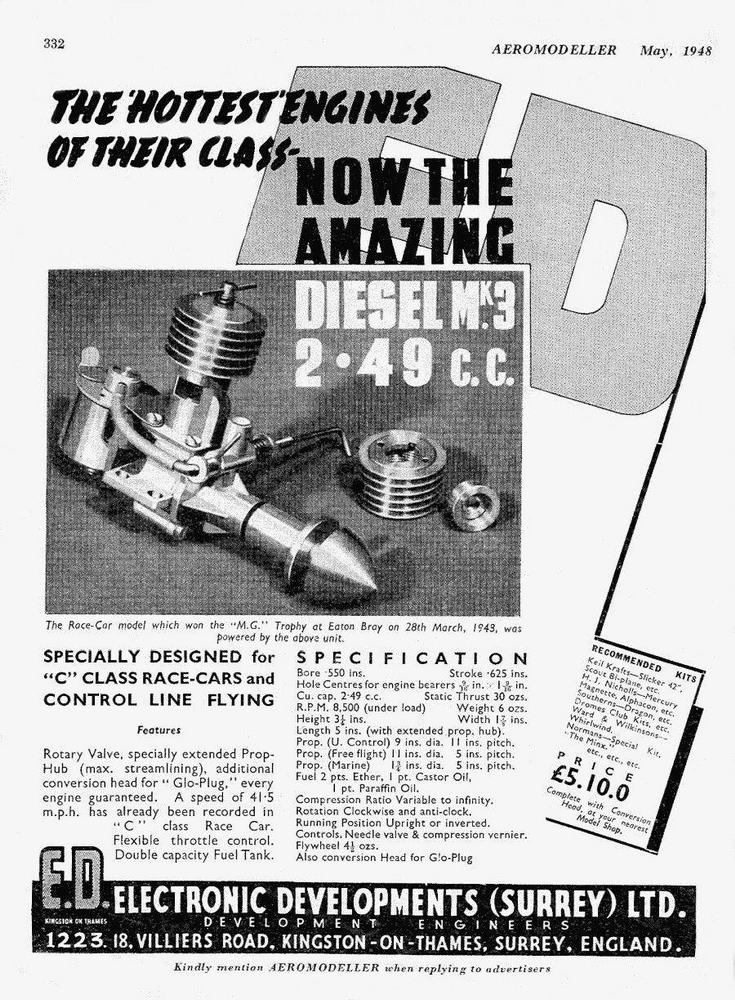

A number of the Comp Special's design features were quickly transferred to the crankshaft front rotary valve (FRV) 2.49 cc Mk III which was released in March 1948. This model used similar cylinder porting to that employed in the Comp Special (including the sub-piston induction), but dispensed with sideport primary induction in favour of a theoretically more efficient FRV arrangement. The Mk III established a number of early speed records in both aircraft and car service, but was quickly overshadowed by improved designs from other manufacturers. Consequently, it actually proved to be one of E.D.'s least successful models, with only perhaps 6,000 units at most being manufactured during its three-year production life.
The E.D. Mk III was highly significant in one respect—it was the first E.D. model to be specifically designed for glow-plug operation at the owner's discretion. In fact, it was the first commercial model engine to be offered to the British public for either diesel or glow-plug operation. Very quick work by E.D. considering the fact that the commercial glow-plug as perfected by Ray Arden had only arrived on the scene in America in late 1947.

In effect, each box contained both diesel and glow-plug versions of the Mk III in a single package. The engines were assembled in their diesel form as supplied, but the conversion was sufficiently straightforward that the Mk III can legitimately be viewed as a purpose-built glow-plug unit if the owner chose to deploy it in that form. Each engine was supplied with an extra cooling jacket and head button to allow the engine to be converted to glow-plug operation with a minimum of effort. All that was involved was to remove the diesel jacket and comp screw using the special spanner provided, extract the contra-piston and replace it with the glow-plug head button, then secure the head button in place with the glow-plug cooling jacket. A short-reach KLG Mini-Glow plug completed the conversion.

One of the things which set E.D. apart from most other manufacturers was their tendency to produce unadvertised variants of a few of their more familiar models. A case in point was the FRV 2.49cc Mk III, which was also produced to special order in an unadvertised sideport version for some time. This engine looked for all the world like a slightly overbored Comp Special, which was in fact exactly what it was. Most modellers probably never became aware of its existence given the absence of any advertising, the consequence being that few examples of this very rare engine were in fact sold. The far later green-headed reed valve version of the E.D. Racer was another example of this rather strange behaviour on E.D.'s part.
The nomenclature used by E.D. during this period was rather confusing at first sight. For example, the E.D. Mk I Bee ("The Engine with a Sting") did not materialize until August 1948, and this was well after the appearance of both the Mk II in March 1947 and the Mk III in March 1948! And it might have been even more confusing if cooler heads had not prevailed—Kevin Richards has irrefutable evidence in the form of a boxed example that the Comp Special was originally intended to be known as the Mk III 2 cc! The label on the box clearly shows both the model designation as Mk III and the size as 2.00 cc.


Although all of this may seem somewhat illogical at first glance, there may have been method in the madness, albeit perhaps as much by accident as by design. Somewhat unusually, the "Mark" numbers of E.D.'s engine range increased with displacement rather than with the order in which the designs were released. In this context, the fact that the company's first offering was designated as their Mk II might be taken to imply that the decision had already been taken to develop a 1 cc engine which was to be designated as the E.D. Mk I (more famous as the Bee). However, the Mk II design was ready 18 months ahead of the Mk I, which first appeared in prototype form in around April/May of 1948 and finally reached the market in August 1948. In this scenario, the Mk II was released as soon as possible in order to generate some doubtless-needed cash flow, leaving the Mk I designation available for the future 1 cc design whenever it was ready. As matters turned out, even the Mk III beat the Mk I into the field, as noted earlier.
On the surface this looks reasonable enough, but Kevin Richards has presented a persuasive argument to the effect that matters were almost certainly more convoluted than this! It's actually more probable that the decision to re-designate the original 2cc model as the Mk II was nothing more than a marketing ploy to convince the public that considerable development of the original 2cc model had already taken place. The original plan to designate the Comp Special as the Mk III 2cc is completely consistent with this notion since it clearly implies the prior existence of Mk I and Mk II versions of the 2cc model.
If this scenario is correct, as seems to me highly likely, then the fact that there was a gap in the Mark sequence to accommodate the far later Bee was entirely fortuitous. Since it certainly doesn't take 18 months to develop a simple engine like the Bee from scratch, it's actually unlikely that the decision to develop the Bee was made until long after the Mk II was well and truly launched. The fact that the Bee appeared in prototype form in April/May 1948 strongly suggests that the decision to develop that model was most likely taken in late 1947 or early 1948, more or less concurrently with the release of the Comp Special. It was probably at that stage (after a few Comp Specials had been manufactured and packaged as Mk III's) that the company belatedly realized the neatness of going up the displacement categories in step with the mark numbers. Having come to this realization, they quickly removed the Mk III designation from the Comp Special, thus leaving that designation free to be applied to the forthcoming Mk III 2.49 cc model. The fact that the engine was never advertised as anything other than the Competition Special suggests that the boxed Mk III 2cc models were part of the stock build-up run which preceded the announcement of any new engine for which brisk sales were anticipated.
E.D. were well aware of the ongoing need to develop their engines, and in common with other manufacturers at the time they had a continuous development programme, frequently driven by other manufacturers' new designs or improvements to existing models. In a very interesting conversation many years ago, Basil Miles told Kevin Richards that E.D. actually made a practise of regularly buying the opposition's latest engines, testing them, stripping them down and generally finding out what made them tick. Any design concepts that were found to have merit on the basis of this evaluation were quickly adopted by E.D.!
An example of this process at work in the initial phase was the deflector piston introduced early on in the career of the Mk II and also applied to the later Comp Special and Mk III. This was a direct response to E.D.'s realisation on the basis of their own evaluation that the Mills 1.3 was a superior design to the original Mk II largely because of the directional control of transfer gas provided by this feature. The later improvement in the bypass passage design on the Mk II and Comp Special was similarly influenced. In general terms, E.D. followed the pattern set by many other manufacturers in freely "borrowing" good ideas from their competitors when they saw them!

The fact that this worked both ways was confirmed only a few years ago in a conversation between Kevin Richards and Trevor Woodason, who was responsible for the development of the Mills 2.4cc model of 1949. Trevor stated that it was only when Mills Bros. bought and evaluated an E.D. Comp Special that they realised the significance of sub piston induction. Not that it did them much good—the Mills 2.4 was even less successful than the earlier E.D. Mk III had been.


October 1949 saw the introduction of the E.D. Mk IV "Three-forty-six", a rear rotary valve (RRV) 3.46cc diesel with a single ball-race crankshaft later named the Hunter. Due to teething problems with the production of the die-cast cases for this model, the initial production batch used barstock cases. However, this was soon changed to the intended die-cast component once supplies became available. In this engine, relative simplicity in both design and construction were combined with excellent performance and reliability by the standards of the day. The reliability aspect was to be put to a stern test within a few years, as we shall see. The engine deservedly became a steady seller, surviving in various forms for many years.

At the end of 1949, the engines were priced between £2 5s 0d for the smallest model, the Mk I Bee, to £4 12s 6d for the largest model, the Mk IV 3.46. To place this in context, during 1950 Aeromodeller magazine advertised a vacancy at their Eaton Bray office "...for a "solid scale" model builder. Must be skilled in detail work. Age 20-25. Salary about £5 a week". Presumably this was a competitive before-tax wage for a skilled young man. Hence, at this time the cost of a pretty basic model engine was in the order of a week's take-home wages for a skilled individual. Puts a bit of context into present-day model engine prices, doesn't it?!?

At some point around the beginning of 1950, E.D. appears to have become a union shop as a result of the workforce organizing under the auspices of an as-yet unidentified aeronautical worker's union of some kind bearing the initials F.M.A.M.W. and having the motto "Unitas". The logo of this organization was an aircraft superimposed upon a map of the British Isles. It appeared at the right-hand end of the company's address block in their advertising from early 1950 right through to August 1961, after which it disappeared from the advertising. By that time of course, almost all of the original working shareholders had long gone.
During the first few years of model engine production just described, the E.D. company implemented a system of serial numbering which has stood latter-day model engine historians in very good stead. The system adopted was unique to my personal knowledge in that each number was completely descriptive of the engine to which it was applied, including the model, the year of manufacture, the month of manufacture and even the position of the engine in that month's production batch. Can't get any more descriptive than that!
Since this system so completely defines the engines to which it was applied, it's well worth taking a little time at this point to provide a clear understanding of the manner in which it was used. Basically, the number applied to each engine contained the following elements:
The following table lists the various model identification codes applied to the E.D engines manufactured by the "original" E.D. company.
| Model | I/D Code |
|---|---|
| Mk II | none |
| Comp Special | C (suffix) |
| Baby | B |
| Bee Series 1 | I |
| Bee Series 2, first variant | Q |
| Bee Series 2, second variant | X |
| Bee Series 2, third variant | V (or none) |
| Hornet | Z |
| Fury | F |
| Super Fury | S |
| Mk III | 3 (comes either before or after the month indicator) |
| Racer | R |
| Reed valve Racer | Y |
| Mk IV Hunter | 4 |
| Marine version (all types after 1949) | W plus standard I/D code |
So for example, E.D. engine number E23/7 was a Mk II made in May 1947 and was the 23rd such engine to have been produced in that month's batch. Engine number E3/166/8 is a Mk III made in May 1948 and was the 166th such engine made that month. Engine number XN2227 is an E.D. Bee Series 2, second variant, made in the December year-end batch in 1957, and was the 222nd engine completed in that batch. And so it goes...
This system allows owners to identify and date their individual engines to a level of precision not possible with other makes from the same era. It also allows the easy identification of engines which have been restored through the grafting-on of parts from a different variant—very common with the early sideport models, for example. It would have been really great for us historians if others had followed suit!
There are a few ambiguities. Although they were both marketed by the E.D. company, the Pep and the Miles Special (see below) were actually made in whole or in part by others. Both of these models used a different serial number sequence which does not conform to the system described above and is not completely clear at the present time.
One of the first and biggest administrative problems which E.D. had to face in these early years was the 1948 Government decision to bring model aircraft parts and accessories, including "power units of all kinds" under Group 20 ("amusements") of the Purchase Tax Schedules. Prior to September 1948, kits and accessories of a constructional nature, while classified under "toys and games", had been exempt from this tax. The 1948 change in policy had the immediate effect of imposing a whopping 331/3% increase in over-the-counter domestic prices of modelling goods. In the context of the cash-starved post-war British economy, this was bad news indeed.
Arguments presented by the Model Traders' Association (MTA) were successful in reversing this decision on kits, but the Commissioners of Taxation insisted that all parts and accessories, including engines, propellers, spinners, wheels, and in fact every identifiable accessory that could be used in conjunction with a model should be subject to tax. The tax was calculated not on the retail price but on the manufacturer's price, presumably making them responsible for collection, reporting and payment. Generously, nuts and bolts were exempt!
To fight this Government decision, the MTA formed a sub-committee comprising Eddie Keil (KeilKraft), Jack Ballard (E.D.), Arnold L. Hardinge (Mills Bros.) and Henry J. Nicholls (Mercury Models Ltd.). The sub-committee received legal advice to the effect that a challenge stood a good chance of being successful and that their best strategy would accordingly be to withhold the payment of Purchase Tax, thus raising a test case. It was anticipated that a favorable decision would be backdated to January 1, 1949. Nevertheless, prudence would appear to have dictated that adequate provision be made by those concerned to address the possibility of an adverse decision. Unfortunately, many (including E.D.) did not. They lost...
The test case dragged on for almost two years, ending in late 1950 with the court upholding the Government position. As a result, British model engine manufacturers entered 1951 facing not only a whopping bite out of future profits but also a very substantial bill for two years' worth of unpaid taxes. It appears that E.D. had not made adequate provision for the payment of back taxes in the event of this outcome, and while they managed to weather the storm it seems certain that their R&D and equipment upgrading programs suffered as a consequence of having to divert precious capital towards the settlement of their tax bill.
While the above shenanigans ran their course through 1949 and 1950, things had been looking reasonably healthy on the engine front. Of the first four engines produced by E.D. (the Mk II, the Comp Special, the Mk III and the Mk I Bee), the three smallest soon started to sell well, two of them really well. The smallest model, the 1cc Mk I Bee, was undoubtedly the biggest selling miniature engine in the UK for quite a few years, with E.D. eventually claiming sales of over 300,000 units for both Series 1 and Series 2 variants combined—probably a somewhat inflated figure in reality if production estimates based on known serial numbers are anything to go by. On the strength of a number of early competition successes, their 2cc Competition Special also achieved excellent sales during the early years and continued in production into the 1950's and even beyond, long after most other manufacturers had abandoned their side-port designs. It was particularly (and deservedly) popular as a marine unit.


Following its introduction in the latter part of 1949, the 3.46cc Mk IV (soon to become known as the Hunter) also gained considerable long-term popularity. In its final short-shaft green-head variant which appeared in 1955, it survived until mid 1962. However, for some reason this final variant never appeared at any time in E.D.'s advertising, which continued throughout to depict the original 1949 finned-head version of the engine! In fact, the image appeared to be the very same one that had been in use since 1949! E.D.'s approach to advertising really does challenge our understanding at times ...!


In March 1951 the range was further augmented by the appearance of the famous E.D. 2.46cc Racer which replaced the relatively unsuccessful FRV Mk III 2.49 cc model. The Racer was an RRV masterpiece which featured radial porting and a twin ball-race crankshaft. It was the first E.D. model to be openly associated with the name of Basil Miles as its designer, and may in fact have been the first E.D. design for which Miles was solely responsible. It proved to be a strong and steady seller for many years, passing through a number of variations as time went by. The Racer was always sold as a diesel, but both glow-plug and spark ignition conversion kits were made available. The engine even appeared in small numbers in an unadvertised green-headed reed valve version.


We noted previously that there is considerable uncertainty regarding the point at which Basil Miles assumed responsibility for E.D.'s engine development program. None of the designs up to the Mk I Bee bear much if any relationship to Miles' previous design work going back to the pre-war period, and it seems likely that these models were developed by the aforementioned Charlie Gray or some other unknown individual. Even the Bee and the 3.46 cc Mk IV with their rotary disc valves bear only a superficial imprint of Basil Miles' design style, although the fact that we have the obviously posed image reproduced earlier showing Basil testing an early Mk IV engine appears to suggest some involvement on his part with that design. It's actually possible that the Racer was the first E.D. design for which Miles was solely responsible—certainly, it is the first design to which his name was openly and consistently attached by the manufacturers.
Unfortunately, the strong sales figures achieved by these engines and E.D.'s other product lines did not fully offset the financial hangover resulting from the failure of the previously-mentioned Purchase Tax case in late 1950. The unfavourable financial situation which resulted from this outcome together with the relatively weak domestic market due to restricted discretionary spending levels among the hard-pressed post-war British public led E.D. to view foreign markets, in particular North America, as the principal areas in which to attempt to re-make their fortunes.

Under the guidance of George Honnest-Redlich, the initial introduction of E.D.'s single channel radio control systems to the USA appears to have been relatively straightforward and successful, with Polk's Hobbies of New York marketing both their radios and engines in the USA. However the introduction of the later multi-channel reed system proved far more difficult. The E.D. reed systems were very similar to the American Citizenship designs and the Americans were not too keen on buying what appeared to them to be English copies of their own equipment. For this reason, the anticipated US export market for these more advanced sets never developed.
As far as the engines were concerned, American modellers were not particularly interested in diesels, preferring the glow-plug form of ignition. The US model engine manufacturing industry was years ahead in design, development and manufacturing techniques as applied to powerplants of that type. American manufacturers also had a far larger and wealthier consumer base upon which to base their revenue picture, allowing them to take full advantage of the economies of large-scale mass production. On top of this, E.D. got very little return for any export success that they did achieve in the US, since wholesaler discounts in America were far higher than those in the UK and hence the only people who really made money were the wholesalers.


Despite all the problems with the American market, E.D. did manage to achieve some export success. Finances in many European countries remained as tight as they were in Britain due to the fallout from World War II, which limited E.D.'s market potential on the Continent. However, the fact that British purchase taxes did not apply to export sales helped to make this market somewhat remunerative, with sales and competition success being achieved in such diverse European countries as France and Russia, as highlighted in the attached advertisements. Sales were also relatively strong in those Commonwealth countries whose infrastructure and populations had been less directly impacted by the war. Paradoxically, the home market was probably the worst sales arena of them all due to the previously mentioned purchase tax decision (which of course only affected domestic sales) along with a general lack of disposable consumer funds in the harsh post-war British economic environment.
Another major challenge for E.D. during the early 1950's was self-inflicted, since it arose from internal competition between their separate product lines. In some respects, having competing product lines must have made sense—accountants love the clear separation of distinct profit centres within a company. However, in the case of E.D. it compounded decision-making problems due to each product line competing within the company for financial support from the Directors in circumstances which severely limited the amount of available funds. The significantly increased domestic competition from the likes of International Model Aircraft (IMA—FROG), Aerol Engineering (Elfin), Allbon and D-C Ltd. among others combined with these competing demands for internal resources to place the E.D. management under considerable pressure. The ongoing fallout from the purchase tax decision together with the company's limited export performance did nothing to relieve this situation.
In view of these obvious problems, it was decided that the company would benefit from the development of face-to-face contacts in potential market areas, both at home and abroad, to seek potential sales to scientific, educational and military organizations. Coupled with demonstrations of the technical and educational potential of its products, the company hoped to convince governments that E.D. products had scientific and educational value and should not attract the same sales tax rates as toys and other "amusements". As it turned out, this face-to-face marketing approach managed to overcome a lot of difficulties in Commonwealth countries, leading to enhanced sales success in those areas. At home, it failed.

Despite this, E.D. continued to make innovative and aggressive moves to promote their products. On the 6th of September 1951, the year of the Festival of Britain, E.D. achieved a genuine modelling publicity coup. A 5 foot long model boat named Miss EeDee was designed and built by George Honnest-Redlich and fitted with E.D. radio gear and a prototype E.D. 4.5cc water cooled diesel engine designed by Basil Miles. Using this combination, an English Channel crossing was successfully undertaken—the first such feat by a model boat.

The non-stop crossing was made from the port of Dover to the port of Calais in just under 9-1/2 hours, passing outbound through the entrance of Dover harbour at 11:30 and arriving at the entrance to the port of Calais at 20:55. The model boat was followed by a small cabin cruiser carrying the radio control operator and a mechanic as well as necessary crew.
Coming hot on the heels of the Festival of Britain, the news of this event was worth much more than any conventional advertising campaign. Such a trip would have been considered heavy going for a small full-scale boat, let alone an even smaller model boat. The feat remains a testament to the designers and builders of the model, the engine and the radio equipment—in fact, to all concerned. Basil Miles was always at heart a model boat enthusiast rather than an aeromodeller, and this achievement must have meant a great deal to him personally.

Interestingly enough, the 4.5cc engine used in this venture appeared to be an enlarged marine version of the 3.46cc Mk IV. It was featured in the E.D. promotional spread reproduced earlier which appeared in the December 1951 issue of Aeromodeller. In that placement, it was specifically referred to as a prototype of the E.D. Mk V, implying that E.D. had ideas at the time about putting it into production as the next upward step in their range in displacement terms, maintaining their established displacement-related "Mark" series in doing so. However, for reasons which are now unclear this model never actually reached production status.


While all this was going on, work was in hand to further expand the range by adding several new models in the smaller displacement categories. The immediate and overwhelming success of the 0.55cc Allbon Dart beginning in late 1950 had attracted the attention of a number of British model engine manufacturers, E.D. among them. This prompted a rush to get competing 1/2 cc models onto the market, with E.D. joining the parade by introducing the popular 0.46cc Baby FRV engine in March 1952. This was followed in December 1952 by the 1.46cc RRV Hornet, introduced to fill a gap in the range with respect to the British 1/2-A contest class for engines having a displacement not exceeding 1.5cc.


As an RRV engine, the Hornet was a design derivative of the Bee, but utilized the simpler radial porting arrangement of the Baby. No provision had been made in the displacement-oriented "Mark" number sequence for these new models, so rather than revising the system E.D. simply allowed the Mark number scheme to die, quietly removing references to it from their advertising. The final advertisements which featured the Mark numbers for the various engines appeared in April 1953. It was at this point that the Mk IV 3.46cc model was re-named the Hunter, appearing by that name in advertisements from mid 1953 onwards. The 2cc Mk II had in fact already been phased out at the end of 1951.
According to later reports, E.D. had also planned to phase out the increasingly venerable Comp Special at the end of 1952, more or less concurrently with the introduction of the Hornet, which they clearly saw as being in effect a updated replacement for the Comp Special. However, orders for the dependable old Comp Special continued to be received in such numbers that this decision was reversed. The engine was destined to remain in production for another 9 years, largely on account of the great popularity of its marine version.


To round out the high end of the displacement scale, the range was augmented in mid 1953 by the Miles Special 5 cc diesel engine. Although marketed by E.D. along with their other models, the Miles Special was in fact independently manufactured by Basil Miles in his own workshop. The engine was also available in glow-plug form direct from Miles. An advertisement placed in the October 1953 issue of Model Aircraft magazine illustrates the then-current engine range as marketed by E.D.
At around this time, Basil Miles had some personal problems which forced him to sever his direct association with E.D. However this did not stop Miles from continuing to design and build engines at home for distribution by E.D., the Miles Special being the best-known example. He also retained some form of arms-length design consultancy with the firm.
Also in 1953 there was a change in leadership, with Jack Ballard leaving E.D. to become involved with an entirely separate competing manufacturing operation. There has been a fair bit of speculation in the past regarding the basis for this split. According to the late Ron Moulton (as related to Kevin Richards), it was falling sales figures and disagreements among the Board of Directors regarding appropriate responses on E.D.'s part which led to the parting of the ways between Ballard and the rest of the E.D. Board. In the end, a compromise could not be reached and Ballard departed to run his own show in his own style.

Ballard initially entered into direct competition with E.D. by joining forces with an existing company called Aeronautical Electronic & Engineering Co. of Alperton, Middlesex (near Ealing). This company had previously purchased the name, designs, dies and inventory of the AMCO range which had been abandoned in mid 1952 by the Anchor Motors Co. of Chester, England. It had made a start by re-introducing the famous AMCO 3.5BB model, for which a considerable pent-up demand existed. We have recounted the story of this company in a separate article on this website.

After joining forces with Aeronautical Electronic & Engineering Co., Ballard established a sister company called AMCO Model Engines Ltd. to market the engines. Dennis Allen was brought on board to assist on the engine production side. The re-introduced AMCO 3.5 BB was soon joined by an improved version of the AMCO 3.5 PB design along with a range of radio control equipment marketed as the Avionic line. However, the results fell well short of meeting Ballard's expectations in commercial terms.

In early 1955, after Dennis Allen had departed to launch his own very successful Allen-Mercury range, Ballard ended his association with the Aeronautical Electronic & Engineering Co. and allied himself with engine designer Charlie Gray to produce the ill-fated J.B. range of engines consisting of the 1.5 cc J.B. Atom (a development of the earlier AMCO Atom which had barely passed the prototype stage) and the 1 cc J.B. Bomb, together with J.B.-branded pre-mixed fuel. Both engines were available in both diesel and glow versions and were attractively finished and beautifully presented. A strong American marketing influence is obvious here, and this may provide some clues as to the kind of advice that Ballard was offering to the E.D. Board of Directors prior to his departure—update the appearance of their products and package them more along American lines. Ballard clearly believed in the selling power of "eye appeal", which the J.B. range undeniably had in buckets!

For a few months, Ballard rode the crest of a wave and even managed to take over E.D.'s long-standing advertising position on the inside back cover of Model Aircraft. But his very sincere efforts came to naught because the J.B. engines suffered from a problematic material specification and (partially as a result) were also sadly lacking in power output. A negative test report in Aeromodeller decided the issue and E.D. were soon back in their former spot in Model Aircraft's advertising roster. The J.B. range only survived until early 1957.
Following Ballard's departure, the job of Managing Director at E.D. was taken over by Jim Donald, one of the original Directors. One of Donald's early achievements was yet another major publicity tour de force. Doubtless inspired by the success and publicity derived from the earlier Channel crossing by a model boat, on September 21, 1954 E.D. successfully undertook the first non-stop crossing of the English Channel from England to France by a model aeroplane, thus reprising the 1909 achievement of the French aviation pioneer Louis Blériot in miniature (and in reverse!) 45 years later.

The aircraft used for this very impressive achievement was a Radio Queen, E.D.'s one and only model aircraft kit which had been designed by Lt. Col. H. J. Taplin. It was powered (or perhaps more precisely, underpowered!) by an E.D. 3.46cc Hunter, as it was now known. The radio equipment was the latest E.D. 3-reed receiver with rudder control operated by a solenoid. The third channel adjusted a trim tab through a Mk 3 escapement. Standard E.D. 3-reed transmitters were used, one on the ground and one operated from an Auster aircraft which followed the Radio Queen for the crossing. Extra fuel was carried in the wings of the model to maintain the balance point throughout the flight.

At 13:35, following an athletic but successful launch from a field appropriately named Blériot's Meadow, climb-out was controlled by one of the famous names of the day, Sid Allen. Control of the heavily-laden model was then handed over to E.D.'s George Honnest-Redlich in the circling Auster which would follow the Radio Queen during its journey. The flight itself was uneventful, and after crossing the French coast at 14:15 the model had achieved its maximum altitude of 3,100 feet and was turned on course for Calais Marck airfield. On arriving over the field at 15:17 after a flight of 102 minutes (as compared to Blériot's time of 37 minutes between the same two points), the model was spiraled down to 800 ft and the Auster rapidly landed to regain control from the ground.
Unfortunately, by the time the Auster had landed, visual contact with the model had been lost and it was last seen heading toward the south-east, flying in wide left hand circles! The Auster was once again scrambled to try and locate the model, but without success. However, six days later the Radio Queen was found by a farmer in a beetroot field at Guemps, about five miles from Calais harbour.

It should be recalled that this feat was accomplished using the vacuum-tube radio equipment of the day in an overweight model inadequately powered by a 3.46cc (.21 cu. in.) diesel engine of basically 1949 vintage. The poor old E.D. Hunter looks positively overwhelmed by the size (and the doubtless considerable take-off weight) of the model! In this day and age power would probably have been a 0.61 cu in (10cc) glow-plug engine at the very least. Quite an achievement and once more, priceless advertising for E.D.
From this point onwards the engine side of the business assumed an ever-greater importance in the affairs of the company, perhaps due in large part to the continued lack of trans-Atlantic success in selling E.D.'s radio gear in North America. This may have had something to do with a further parting of the ways, when E.D.'s original radio control guru George Honnest-Redlich left to form his own company called Radio & Electronic Products located in nearby Mortlake. One by one the Old Guard was moving on ... by this time, only around half of the original working shareholders remained with the company.


In August 1955, E.D. released a completely revised Series 2 version of the very popular Bee 1 cc model. Both the crankcase and cylinder were re-designed to feature loop scavenging allied to a side-stack exhaust, more typical of American glow-plug design practice than that conventionally applied to small diesels. There was no great improvement in performance, but the engine certainly presented a striking appearance and proved to be both reliable and easy to handle. It went through several more design evolutions and continued to be one of Britain's top-selling engines throughout this period, largely due to its wide acceptance among beginners and sport fliers. My own first diesel was one of these units, and I was far from being alone.
The sales figures achieved by the Bee and a number of its stablemates in the E.D. model engine line-up seem to have had the effect of reinforcing the growing conviction of the Directors regarding the ever-increasing importance of the model engine range in E.D.'s overall business plan. By 1956 some 90% of the floor area at the Villiers Road premises had reportedly been given over to model engine production at the expense of the radio control side. If E.D. wished to maintain and if possible enhance full production of both engine and R/C lines, some form of action was clearly required to redress this imbalance. The revenues generated from engine sales were apparently sufficient to permit the company to make a further investment in their production facilities.

Accordingly, March 1956 saw a move from the Kingston premises to a new building on a then recently-established industrial trading estate at Island Farm Road in nearby West Molesey. The new facility had a floor area of 10,000 square feet—over twice that of the former Villiers Road premises. Along with this move went a significant and long overdue addition to the company's machine tool inventory, including a number of centerless grinders and automatic lathes. The workforce seems to have been transferred wholesale to the new premises, with the less mobile workers being transported from Kingston to West Molesey on a daily basis in two Ford Trader minibuses.
The investment required to accomplish this move must have taxed E.D.'s financial resources in the short term at least, since the financial return resulting from their enhanced production capacity would of course take some time to accrue. It would seem that E.D.'s R&D programs suffered to a degree from this situation, since after settling into their new premises E.D. stood pat for the next two years, introducing no new models but rather re-evaluating and making minor modifications to their existing designs while maintaining their sales performance with their loyal customer base. At this stage the company was clearly relying on the fact that its model engine range was by now very well established both at home and abroad, allowing quite high production figures to be maintained as confirmed by a review of monthly batch numbers from this period. In fact, there's little doubt that E.D. was Britain's largest-volume producer of model engines during this period.

However, no company in a competitive field such as this can afford to stand pat for too long. In May 1958, E.D. announced their first all-new model for two years, the 1.46 cc reed-valve Fury. This was the final E.D. design with which Basil Miles was indirectly associated. It was released with high expectations but proved to be uncompetitive both in terms of price and performance. It was by no means the success that it was hoped to be and hence did nothing to pull E.D. out of the doldrums into which they were then beginning to sink. It seems to have been at around this time that Basil Miles' arms-length connection with E.D. was finally severed, although he remained active in model engine development into the 1970's.

The Fury looked like a scaled-down version of the Racer but was equipped with reed valve induction. An unadvertised but very similar 2.46 cc green-headed reed valve version of the Racer had been produced in very small numbers beginning in 1957, and this was to remain available to special order until 1961.

An interesting sideline to the E.D. story which had its origins during this period was the development of the 7cc Taplin Twin which made its commercial debut in Mk I form in December 1958. This unit was designed by Col. H. J. Taplin following a series of experiments beginning in the mid 1950's. The Twin was manufactured by Col. Taplin's Birchington Engineering Company of Albion Road, Birchington in Kent. Earlier 4cc and 5cc prototypes had respectively used cylinder assemblies from the E.D. Comp Special and Mk III sideport designs, but the 7cc production version employed modified E.D. 3.46 Mk IV Hunter piston/cylinder/rod assemblies of the later green-head type as well as an E.D. Mk IV front crankshaft and prop mounting assembly. These components were supplied directly to Birchington Engineering through a contract with E.D., who thus had a financial interest in the new twin and presumably made a little money on the strength of its success in the marketplace.
Despite this successful collaboration, the failure of the Fury as well as a number of on-going production problems still left E.D. in the latter part of 1958 facing a situation in which development of their range had gone sideways and their production program was in a very shaky state, with a rising incidence of quality control problems due in large part to their aging equipment which they could not afford to replace. Moreover, they had now lost the services of Basil Miles and had little in-house engineering expertise of their own. Clearly they needed help, and needed it quickly!
As matters transpired, such help was available in close proximity to the E.D. factory in the person of Gordon Cornell, who had been working on the FROG range with George Fletcher over at International Model Aircraft (IMA) in nearby Merton. Cornell had not always seen eye to eye with Fletcher and was ready for a change.

Accordingly, during the latter part of 1958 Gordon Cornell moved over from IMA to become the chief engine designer for E.D. His brief from the E.D. Board of Directors was, in his own words, "to create a development plan to bring all designs up to a satisfactory production standard in order to satisfy both the bank and the Directors". It would appear from this that E.D.'s financial backers were now putting pressure on the company to improve its financial performance.
In a subsequent conversation with Kevin Richards, Gordon shared some of his impressions upon his initial familiarization with the E.D. operation. He particularly recalled his astonishment at finding that the somewhat unique job of soldering the transfer port and inlet boss on the venerable Comp Special, then in its 11th year of production, was still being carried out in the same manner by the same personnel as it had been in 1948!
Gordon wanted to carry out a time-and-motion study of the entire E.D. machining and assembly process, including this archaic operation. However, management did not support his recommendation. This was just one of a number of factors which led to Gordon becoming increasingly dissatisfied with the state of affairs at E.D. as time went on.

Once settled in and having assessed the many problems requiring attention, Gordon Cornell took on the task of completely redesigning the Fury to deal with its performance shortcomings. The result was the first in the long-lived series of Super Fury 1.46cc engines that were to come. In addition to other internal modifications, Gordon returned to the RRV induction system of Basil Miles' original Racer design and did away with the opposing exhaust ducts in the crankcase casting, allowing the 360° porting of the cylinder to vent freely—a logical modification applied not infrequently and often less expertly by many earlier Racer owners.

The Super Fury was finally released in early 1960. Interestingly enough, the reed-valve Fury continued to be offered for some time thereafter, making its final appearance in E.D.'s advertising in June 1960, some months after the release of the Super Fury. This was clearly a case of selling of unsold inventory to recover tied-up capital.
The Super Fury was a top performer by the standards of its day and survived well into the 1960's in its original form, finally disappearing in mid 1964. The first 200 or so examples of the new model were produced with magnesium alloy cases which were most likely left-over Fury components. However, these were to be the last engines produced by E.D. using cases cast from this material—all subsequent castings were produced in aluminium alloy. There have been tales to the effect that this change was prompted by the risk of fire arising from the use of the rather inflammable magnesium alloy, but Gordon Cornell later told Kevin Richards that the real reason was the poor quality of the magnesium alloy cases. In Gordon's recollection, something like 50% of the cases proved to be unusable, a clearly unacceptable ratio.
Having got the Super Fury off to a good start, next on Gordon's upgrade list was the old E.D. Bee, now in its fifth year of production in Series 2 form with loop scavenging and side-stack exhaust. Apart from its first year or so of production beginning way back in mid 1948, the Bee had never been noted as a "performance" model, although it had proved extremely popular with beginners and sport fliers. However, its performance disadvantage over a number of competing models had now widened to the point where sales were definitely beginning to flag.

In an effort to rehabilitate the Bee in the eyes of the modelling public, Gordon now revamped a number of features, most notably the transfer porting, to produce a vastly-improved performer that was in every way a match for such highly-regarded competing 1 cc diesels as the A-M 10. This revised version of the Bee appeared in the latter half of 1960. In his test of the engine which appeared in the February 1961 issue of Model Aircraft, Peter Chinn recorded an output of 0.11 BHP@ 15,100 rpm, a performance which matched that of any British 1cc diesel then on the market, the standard-setting A-M 10 not excepted.

However, E.D.'s advertising inexplicably failed to so much as mention the vastly improved performance of the revised design, continuing to present the Bee exactly as before. Consequently, the modelling public remained in blissful ignorance of said improvements unless they happened to either read Chinn's test report or see one of the new models in operation. Unfortunately, in the absence of any promotional effort by the manufacturers, the Bee's reputation as a dependable but less-than-stellar performer was too well entrenched by this time for the performance of the revised model in the field to restore the engine's former popularity. Hence the improved design really didn't have much impact upon the waning fortunes of the E.D. enterprise—a clear and inexplicable case of lost opportunity. Examples of the Bee in this form are relatively rare and are prized collector's items today.
Regardless, with the above technical successes under his belt Gordon now began to focus his attention upon a revamping of the still-popular E.D. Racer. If this program had been fully implemented, we might have witnessed great things from the E.D stable! However, events had been unfolding at E.D. that were to have a decisive influence on Gordon's future relations with the company.
While Gordon was sorting out the various production issues and finalizing the design of the Super Fury in 1959, the company management had been looking at expanding into the .049 cuin field which was then a preoccupation of a number of British manufacturers. This was prompted by the success of the American .049 glow models which had begun to reach the British market in quantity in the late 1950's. A British ".049 revolution" of sorts had been started in mid 1959, with D-C Ltd., Allen-Mercury and IMA (FROG) all adding .049 glow models to their respective ranges and KeilKraft joining in the fun later in 1960 with their excellent Cobra glow model.


Clearly, E.D. wanted to be a part of this movement, but they chose to do so with an all-new diesel design. Before finally severing his connection with E.D., Basil Miles had designed a 0.75 c.c. prototype which looked a bit like an oversized E.D. Baby—Kevin Richards still owns this prototype. Recalling this effort on Miles' part, E.D. now set about the development of a new E.D. 0.81 cc diesel to be known as the Pep. They appear to have wanted to keep Gordon hard at work on the various other projects on which he was engaged at this time, so they decided to cut a few design corners by basing their new model on the earlier American OK Cub .049 diesel. They also broke precedent by contracting out at least part of the production work to an outside company named Bardsley's located in Brentwood, Middlesex. The evidence suggests that the agreement with Bardsley's was essentially confined to the assembly, testing, packaging and servicing of the engines, using parts mostly manufactured by E.D.
Unfortunately, Gordon was not consulted beforehand regarding the criteria to be applied to the design or manufacture of the Pep. Consequently, the project was pursued without Gordon's input and in collaboration at some level with others outside the E.D. company, not being subject to an internal technical evaluation by qualified E.D. staff until a considerable investment had already been made in design and tooling.
As events proved, the prototype Pep engines fell short of meeting expectations despite the considerable funds that had been invested by E.D. in design work and dies. It was only when E.D. management woke up to the fact that they were looking at an uncompetitive new model that Gordon was deflected from the other work upon which he was then engaged and was tasked with the job of sorting out the dog's breakfast into which the Pep program had evolved.
Gordon's task was made very difficult indeed by the fact that a substantial investment had already been made in dies and components which the company was not prepared to write off as scrap. He was thus working under very narrow constraints as far as the range of possible fixes was concerned. He made a number of suggestions which were not implemented—instead, the design which finally reached the market was a compromise, with a number of potential improvements left untried. In essence, Gordon had to fix the engine as it stood rather than make any major design changes, a situation which naturally left him feeling rather frustrated.
The most critical issue with the engine as it then existed was the fact that the venturi bore was too large and didn't create adequate suction, thus giving inconsistent running. This was easily fixed by using a venturi insert, but that was as far as the major modifications could be taken. A number of examples have been seen with an aluminium spacer under the cylinder, which may have been used to modify the port timing by raising the cylinder, but it's not clear whether or not Gordon had anything to do with this.

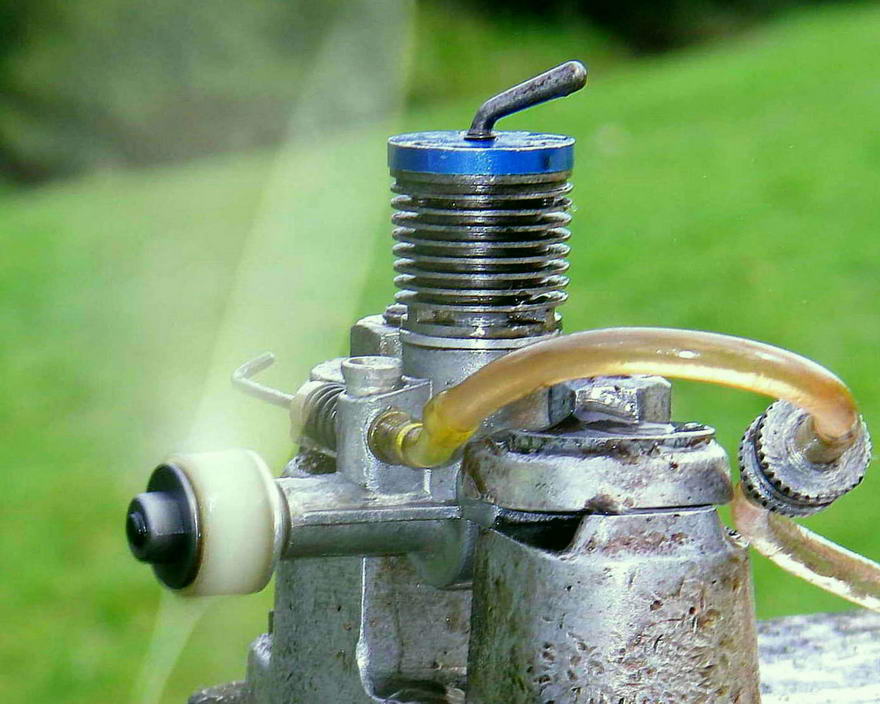
Despite this situation, it's an undeniable fact that the production version of the Pep which finally appeared at the end of 1959 was a good looking little engine which performed well by the standards of the day. Although most of them featured blue-anodized heads and tanks, the engine appeared in a number of color schemes including red, green and even plain un-anodized alloy.
I'm able to speak with some authority on the running qualities of the Pep since I'm a past user and present owner of several of these engines. A present-day club-mate of mine also had one "way back then", and he too recalls it with great affection. It's perfectly true that the Pep offered no particular threat to the US imports and possessed no real edge over the best of the domestic competition either. However, it was a far better engine than its subsequent reputation would suggest.
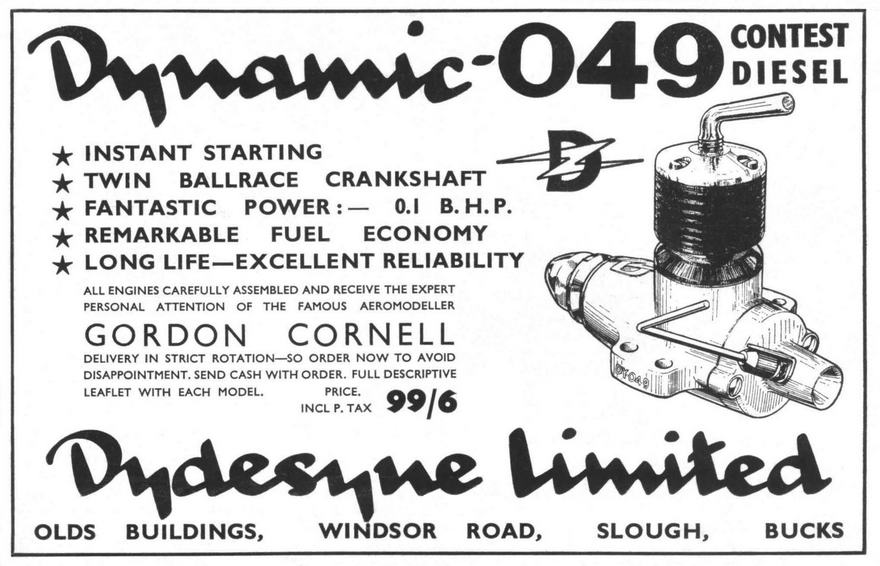
As 1960 drew on, Gordon Cornell became increasingly frustrated at management inaction with respect both to his recommended production improvements and his proposed upgrade programme for the Racer. The handling of the Pep situation had done nothing to improve Gordon's outlook, and presumably the management failure to promote his vastly improved version of the Bee was the final straw which caused Gordon to decide that enough was enough and resign from E.D. in late 1960 or early 1961. His departure was very much E.D.'s loss. Gordon went on to design and manufacture the superb but very rare little Dynamic .049 diesel which was first announced in March 1961. He remains directly involved in model engine development today (2012), still working on an updated version of the Super Fury.
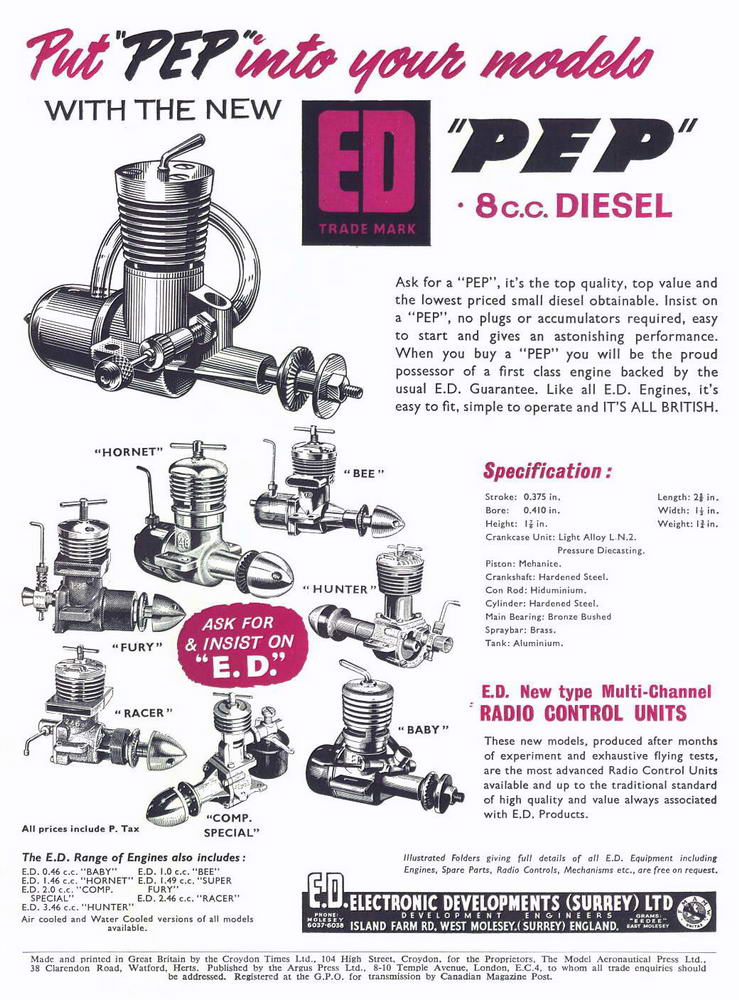


Gordon may understandably have taken some rather ghoulish satisfaction from the fact that the Pep failed to make much of an impression in the marketplace despite a somewhat frenzied effort by E.D. to promote the engine in an attempt to recover their considerable investment in the design. This was in stark contrast to their total lack of attention to the promotion of the much-improved Bee which Gordon had so successfully developed. E.D. were still featuring the Pep in August 1961 while maintaining their inexplicable silence regarding the revamped Bee. The Pep continued to be advertised up to September 1962 but disappeared shortly thereafter.
As mentioned earlier, the Pep was actually far better than its subsequent reputation might suggest, and it's my impression that to a certain extent its failure was due to the perception of E.D. by this time as one of "yesterday's brands". In addition, by the time it appeared the British small-engine craze of 1959/60 had already peaked and was beginning to lose steam, the result being that the British market was becoming over-saturated with small engines.
As a result of this, not that many Peps were actually made and sold. Consequently, examples of the engine in good condition are now relatively few and far between, changing hands on the collector's market for surprisingly high prices. There also appear to have been quality problems with Bardsley's assembly and servicing activities, since there is evidence in the form of some later Pep instruction leaflets to the effect that towards the end of the Pep's production life E.D. cancelled the contract with Bardsley's and took over the assembly and servicing themselves.
After E.D. cancelled their contract for the Pep with Bardsley's, a new company was formed in Brentwood under the name of De-Za-Lux Developments Ltd. There's presently no evidence apart from the location to suggest that this company had anything to do with Bardsley's—the street address was certainly different. In fact, the new venture may have been funded by RipMax, who undoubtedly became their exclusive distributors. Be that as it may, De-Za-Lux took over the Pep project after E.D. abandoned it and undertook some more development work, including an increase in the displacement to 0.92 cc. This was achieved through a modest increase in the bore, the stroke being unchanged.


The resulting engine was marketed initially as the ZA Griffin and later as the ZA .92, but it owed quite a lot to the Pep design—in fact, the earliest examples of the engine actually used left-over Pep crankcases with the E.D. initials filed off, although both the bore and the cylinder porting arrangements were different. In this modified guise, the Pep lived on for a few more years. This too was a very nice little engine—I certainly enjoyed using my own example, which I still have.
Returning to the main E.D. story, when IMA announced plans to cancel their FROG engine manufacturing program in 1962, George Fletcher was left looking for fresh employment, thus being available to take Gordon Cornell's place at E.D., which he did in early 1962. Fletcher's arrival coincided with a change in the company's name from Electronic Developments (Surrey) Ltd. to the somewhat more descriptive name E.D. Engineering & Electronics Ltd, still at the Island Farm Road address. This name began to appear in E.D.'s advertising in May 1962.
We'll never know what impact Fletcher's arrival might have had upon E.D.'s model engine range, because on April 29th, 1962, shortly after Fletcher's arrival, a fire seriously damaged the E.D. premises. The fire was the result of arson by two youths during the course of a break-in. They were subsequently caught and convicted for this offense. We might suspect that the previously-mentioned concurrent company name change had something to do with this unhappy event, but in fact consideration of the editorial deadlines for the submission of advertising material for the May issues clearly implies that the name change must have preceded the fire.
The loss of machinery, records and stock was a disaster for the company from which it never really recovered. However, a fair proportion of the vital castings and materials were salvaged, and thanks to George Fletcher's efforts E.D. were once again back in business soon after the fire, albeit with a substantially reduced production capacity and an increasingly truncated range. The Baby, Pep, Hornet, Hunter and Bee were all progressively dropped as parts inventory ran down, with only the Super Fury, the Racer and the 3.46cc marine-only Sea Otter carrying on as before.


Fletcher's initial new design for the company appeared later in 1962 in the shape of the Cadet 1cc side-port diesel, complete with a very neat matching silencer. This was an adaptation of the E.D. Bee crankcase to a sideport design and was intended to demonstrate the feasibility of sport-flying in urban environments using an extremely quiet low-powered engine having characteristics well suited to beginners. The Cadet was fitted with the type of spring starter which had first been inflicted upon the British marketplace by D-C Ltd. beginning in 1959. Since this feature was quite unnecessary, most owners quickly dispensed with it. On the other hand, the silencer proved to be very effective indeed on those Cadets that could be coerced into starting. Once running, you could barely hear them from just over the garden hedge next door! Even without the muffler, they were far from objectionable.


However, one of the consequences of the fire was a significant erosion of E.D.'s ability to maintain adequate quality control, and there were serious quality inconsistencies with the earlier examples of the Cadet (notably a tendency towards marginal compression seal) which prevented some of them from running at all! Even those that did run were woefully lacking in peak power by comparison with most of the other 1 cc diesels then available. A Mk II version was produced which performed a lot better and more consistently, but the Cadet never managed the kind of performance that it took to excite the marketplace of the day.
That said, the main problem was one of owner perception rather than any shortcomings in the engine itself. People both then and later tended to overlook the fact that the Cadet actually did exactly what it was designed to do—start easily and swing a sizeable airscrew at extremely low noise levels. Owners tended to under-prop the engine, failing to recognize that as a side-port design with a restricted exhaust system, torque at lower speeds would be its strong suit. On larger props, the Cadet was quite comparable with many of its competitors, but few contemporary modellers appreciated this at the time. Although the engine completely fulfilled its intended role of offering a positive experience for beginners and sport fliers in urban areas, the reputation for low power that it rapidly acquired sealed its fate in an increasingly unforgiving marketplace. Perhaps because of a combination of the above factors, Cadets are relatively rare and quite highly sought-after today, especially those that actually run! Complete examples which retain both their mufflers and their starter springs are rarer still.
The last E.D. engine from the "original" company, also designed by Fletcher, never quite made it past the prototype stage into production. This was the 10cc (.60 cu. in.) Condor R/C glow plug engine which E.D. began pre-announcing in their 1962 advertising. It incorporated all of the features expected from a contemporary .60-sized engine, such as an exhaust "chopper" flap-valve which was synchronized with a properly-designed carburettor for positive and responsive throttling. A few examples were constructed and given to top British R/C flyers to promote the design, but the engine never made it into series production. There is a strong possibility that the fire had a lot to do with this unhappy outcome.
This was most unfortunate, because the Condor undoubtedly represented a belated recognition by E.D. management of the changing nature of the marketplace and a serious attempt to move from the past into the future. If it had got off the ground, it might well have been the catalyst for moving E.D. forward into the new R/C-oriented market that was then developing.
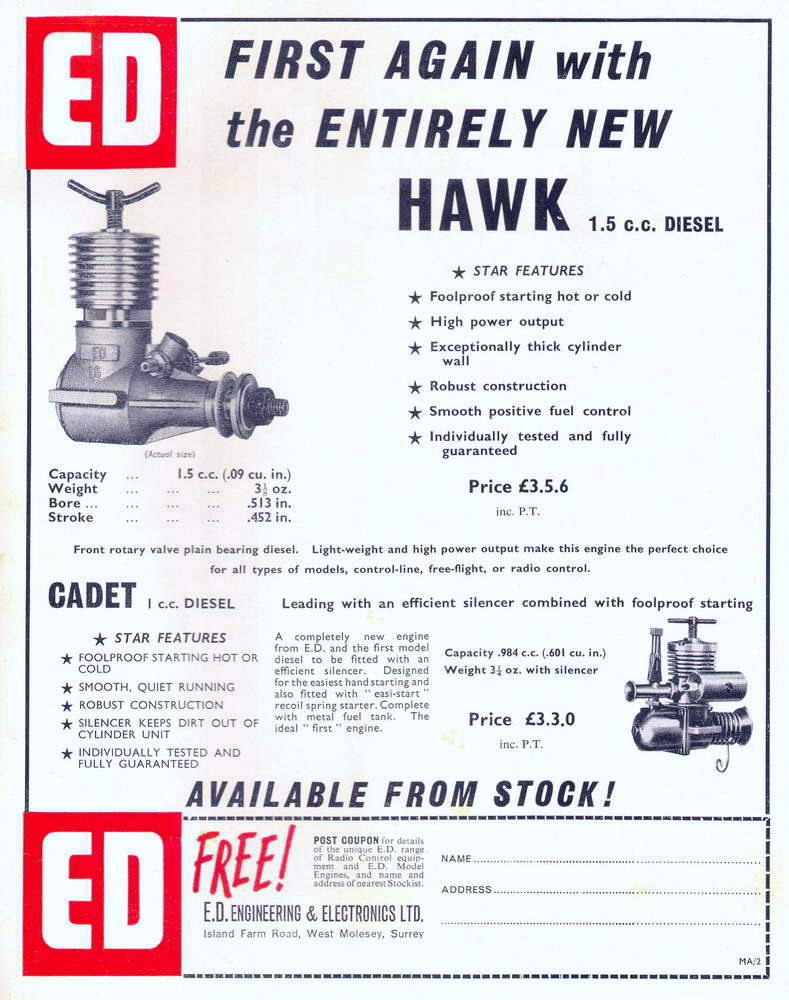
In August 1963, E.D. introduced the plain bearing 1.5cc Hawk diesel. However, this cannot really be viewed as an E.D. design. Peter Chinn's review of the engine in the December 1963 issue of Model Aircraft stated:
"The thing that will surprise most modelers familiar with previous E.D. products is the legend "Made in W. Germany" cast into the crankcase. The Hawk is, in fact, made in Germany to E.D.'s specifications and those modelers familiar with the products of Messrs. Fein und Modell Technik of West Berlin will not be long in recognizing the obvious relationship with Webra engines".

A further product of this association with Fein und Modell Technik was the production of a limited number of Racers which were very neatly fitted with one of Webra's commercial silencers. There are stories which suggest that these engines were in fact made (or at least assembled) in Germany by Webra using parts and/or tooling supplied by E.D. This may or may not be true, but it could be significant that these engines did not carry E.D.'s usual serial number, suggesting the possibility that they might have been made elsewhere. I have one of these units, and it runs amazingly quietly, albeit down on power compared to the un-silenced model and also tending to run rather hot.
This was the end of the road for the "original" E.D. company, and a series of ownership changes began at this point.

For a brief period in 1963/64, E.D. was in the hands of a German business consultant, a situation which was presumably related in some way to their association with Fein und Modell Technik. The brand was then purchased by Eric Falkner and re-established at his National Works, Hounslow, where his RCS factory was producing R/C and other electronic equipment. Little if any development took place, but with the help of a number of ex-E.D. workers RCS assembled a selection of engines from existing and salvaged stock which were offered directly to the public at knock-down prices. The Cadet and the Hawk were in fact offered without guarantee or after-sales service, while the various Racer variants (including the Webra muffler-equipped version as well as a factory-tuned model) and the revived 3.5 cc models continued to be offered on normal retail terms.

By the end of 1965, E.D. had been sold yet again, this time to Ken Day. Ken was the nephew of Bert Day, one of the original E.D. directors. Ken owned and managed an established precision engineering company and knew the model trade well. Operations were moved to 64 Brighton Road, Surbiton, where under Ken's care the Racer changed its form to the Mk V and VI versions which featured plastic backplates and carburettors, as did the later Super Racer high-performance version of the engine. The Hunter too was updated to became the Super Hunter, which could be purchased with an exhaust throttle and could also be fitted with an accessory tuned exhaust system.

1970 saw the release of a redesigned version of the Super Fury. The external appearance was basically similar to that of the original Fury with its twin exhaust stacks, but the design now incorporated the fundamental changes of the updated Gordon Cornell version and ultimately included the option of a variable speed carburettor. Performance was significantly improved over that of the original version.

Under Ken Day's direction, the Surbiton-based incarnation of E.D. maintained a position in the model trade for some ten years more. Tuned pipes, designed by Kevin Linsey, and improved carburetors were introduced to improve performance and speed control. Production of a number of the established E.D favorites continued throughout this period, with an increasing emphasis on the highly-regarded marine models such as the Viking, Sea Lion, Sea Otter and the rear exhaust marine Super Hunter.

The very last version of the E.D. Super Fury appeared in 1980. It was intended to be a "replica" of the original blue-headed Super Fury of 1960, since it sported a blue-anodized head and dispensed with the twin exhaust stacks. However, it was very far from being a true replica since it retained the plastic backplate and rear disc valve of the previous Surbiton models. It did however perform at a very high level and remains a fine collectible in its own right.
In this manner, the E.D range continued to hold a place in the British model engine marketplace into the 1980's. However, competition from the US, Japan and other developing countries was then rapidly submerging the British model engine industry in almost every respect, just as it was doing concurrently to the British motorcycle and automobile industries. Consequently, E.D. continued to fade gradually into the background despite the best efforts of Ken Day and his colleagues.
Eventually the business passed into the hands of Brian Etheridge, who moved the enterprise to Hampton Court. Here E.D. continued to trade for another five years or so until financial considerations resulted in a further change of ownership to Alan Greenfield of Weston (UK) in 1985.
Alan had worked with Ken Day from 1972 onwards and hence knew the products well. As a very active marine and aero modeller, Alan was well versed in the technology of tuned pipes, multi-speed carbs and marine engines. With his experience of E.D. and its products, Alan resurrected many of the original engine designs in the range using original tooling and castings that had survived over the years. E.D. moved yet again, this time to Sittingbourne in Kent. The original designs that survived were the Racer and Super Racer, the Super Hunter, the Viking 4.9cc marine, the Super Otter 3.46cc marine, the Sea Lion 4.9cc marine and the air-cooled Viking into which the old 5cc Miles Special had now been transmuted.
As a result of Alan Greenfield's dedication, E.D. carried on as a quiet but still active side-line business providing tuned pipes, selected spares and (to special order) copies of some of the previously manufactured E.D. engines. Examples included the Super Hunter and marine models such as the Sea Otter, Viking and Sea Lion, as well as a copy of the Miles Special, all of which remained available as of 2007 at prices varying between £65 and £110.
Hence, far from being dead, sixty years on E.D. still survived, even if it had become a bit of a hobby sideline. We might legitimately conclude that E.D. didn't drop dead like so many others but slipped gracefully into an honorable retirement!
|
|
This work is licensed under a
Creative Commons Attribution-Noncommercial-Share Alike 3.0 License. |
This page designed to look best when using anything but IE!
Please submit all questions and comments to
enquiries@modelenginenews.org

|
Unless otherwise expressed, all original text, drawings, and photographs created by
Ronald A Chernich appearing on the Model Engine News web site are licensed under a Creative Commons Attribution-Noncommercial-Share Alike 3.0 License. |
|

