WATZIT?!
Model Engines of Unknown Origin
Page 5
Last update: February, 2009
Click on images to view them in larger size and more detail.
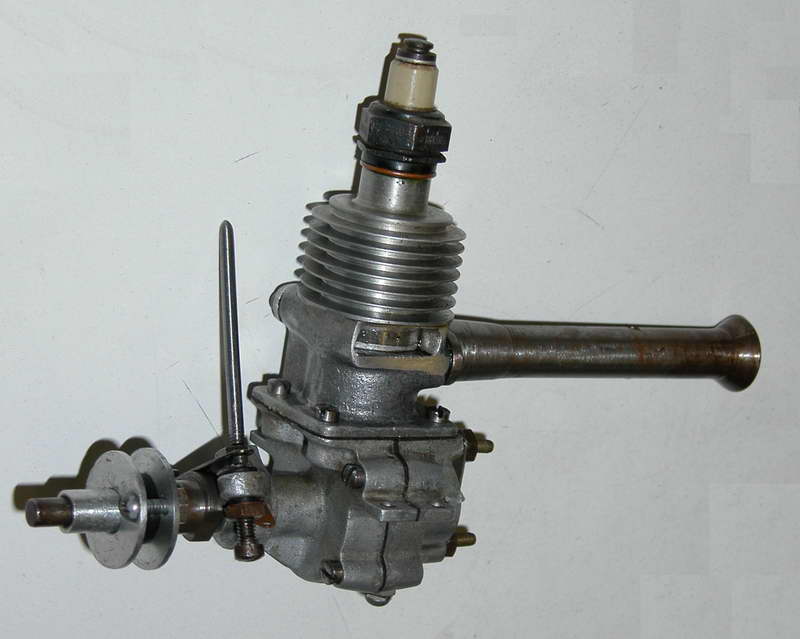
Cyrano de Sparkie
 |
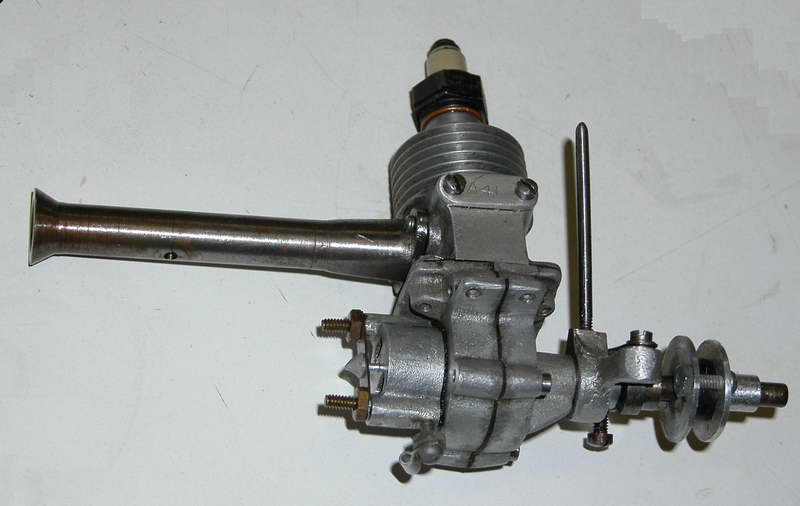 |
Items worth note are the way the prop is retained via two screws through the hub (thus weakening a wooden prop), the evidence of something strange going on with the piston and liner as seen through the exhaust port, the mysterious gizmo at the back, and the lack of any way to get fuel into the engine. The latter might be explained as an unfinished detail of the long inlet modification where a hole about one third way from the end could have been for a spray bar. The castings appear quite nicely done for the period, and there is an obvious "A41" designation or serial number stamped into the coverplate over the upper transfer port.
The engine had me completely beat, but luckily Ken Croft was able to supply chapter and verse on the (unmodified) engine, having been involved in the restoration of an example of it some years back. The amount of detail Ken was able to provide, ably assisted by invaluable material from ECJ (every collector should own a full set!) was sufficient to make a mini-review page, so click the link to see The Answer, and what a less well endowed example looks like.
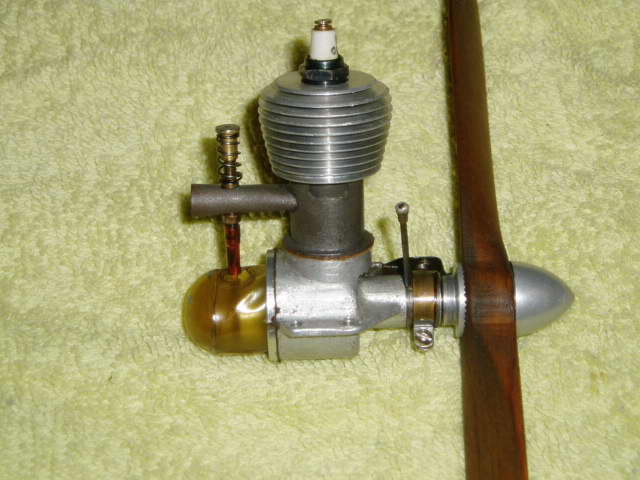
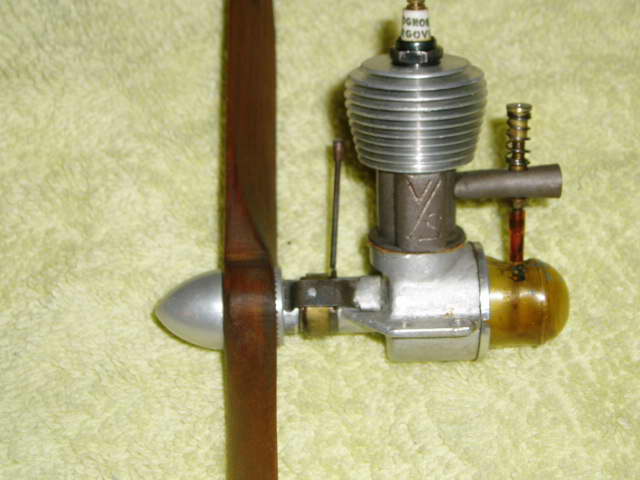
Dutch Sparker
 |
 |
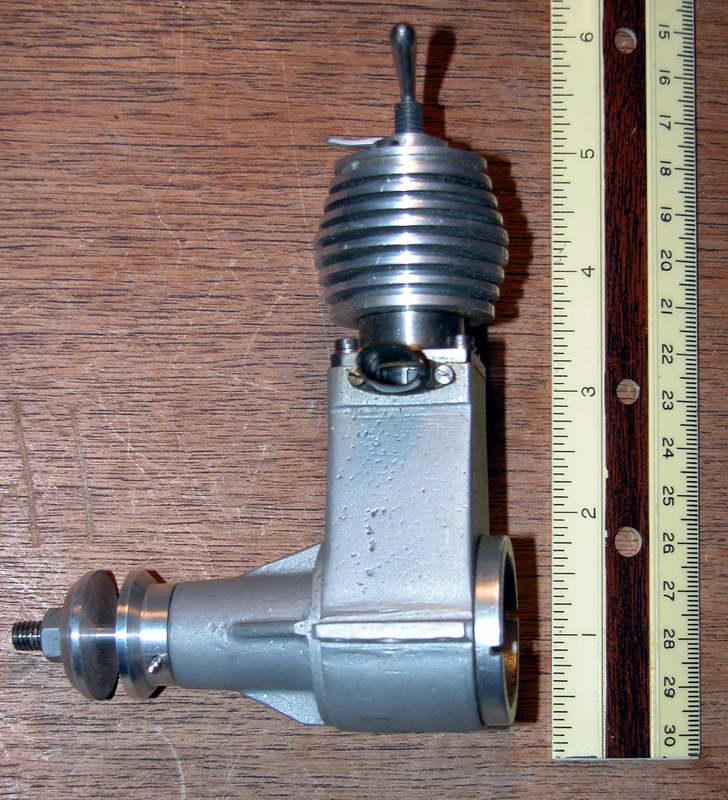
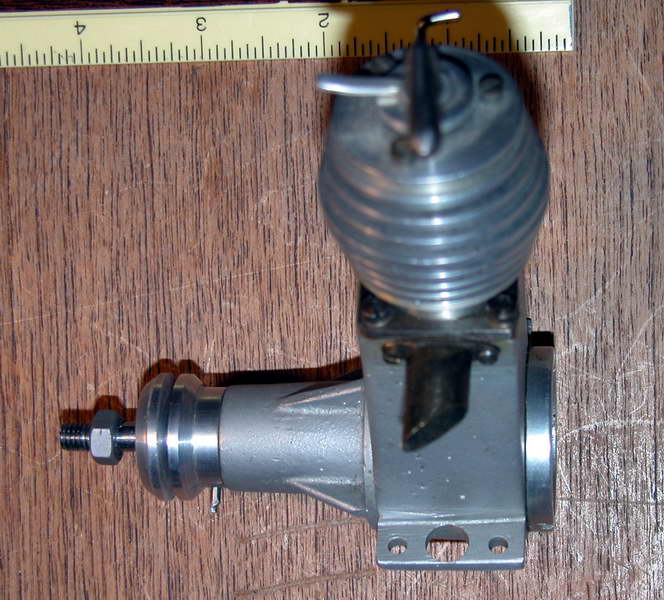
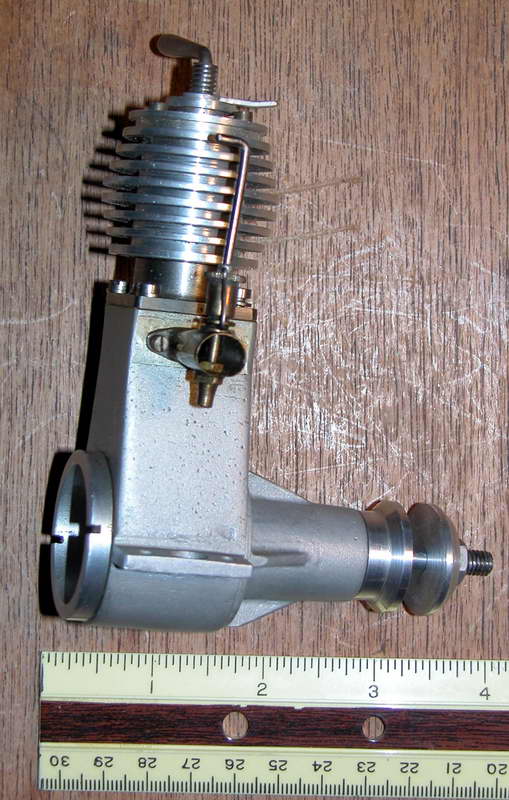
Old Diesel
 |
 |
 |
The Answer:
For shame, Ron. It's a Czech BE-4. Oh well. At least I got the home-built bit right.Double Strength Blizzard
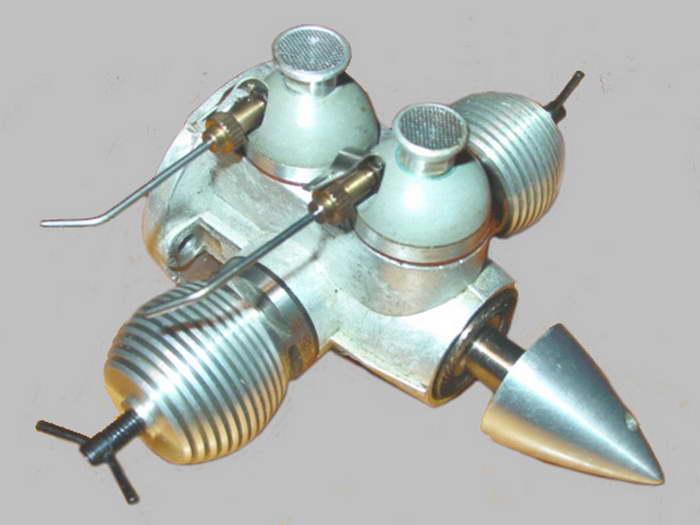 It's a Blizzard, Jim, but not as we know it... Or if you're not a Trecker and Crocodile Dundee is more your bag, Blizzard? That's not a Blizzard. Now THIS is a Blizzard! Regardless, this is certainly no engine Taifun ever made, but whoever it was who made it has gone to a lot of trouble to make a die cast crankcase for a very nice looking 5cc boxer twin diesel. The photo came from Jim Duncan who has produced a most definitive book on small model engines and has another in train for which he is collecting material. Jim has not examined the engine physically, so we don't know a lot about it except that it uses Taifun Blizzard cylinders and reed valve assemblies.
From the photo, it appears that the cylinder axis may be in-line, meaning offset conrods which would be quite difficult given the "standard" European formulae of 15mm x 14mm for the bore/stroke. In-line axis cylinders would pretty much rule out separate crankcase cavities suggested by the twin reed valves for alternate firing twin. Alternate firing also destroys the "balance" inherent to opposed twins, though it has been done in at least one commercial 4-stroke. It's also possible that a central crankweb forms an additional crank support bearing. This has been done before and would also explain the need for dual inlets, although the two cavities would still interconnect. But this arrangement almost dictates staggered cylinders because of the distance between the conrods! All in all, quite a box of mysteries, so if anyone can help identify it and supply details of the builder and internals, we'd sure appreciate it.
Marinated 4-stroke
 |
 |
 |
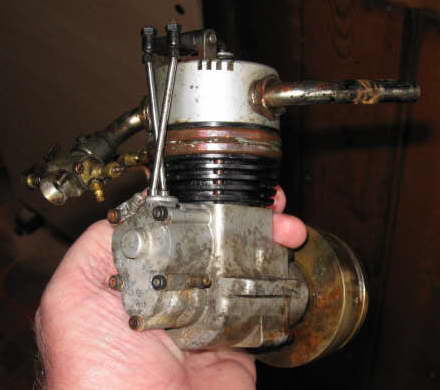 |
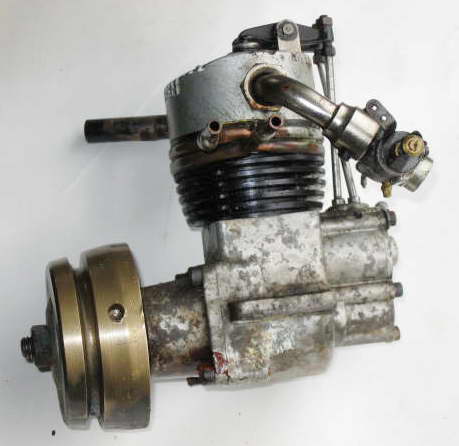
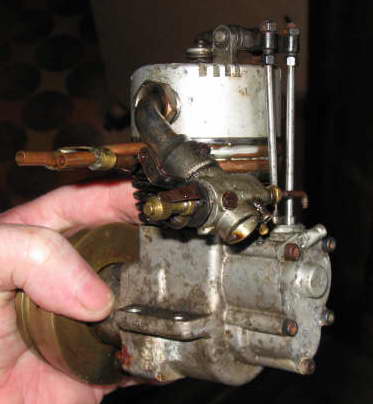
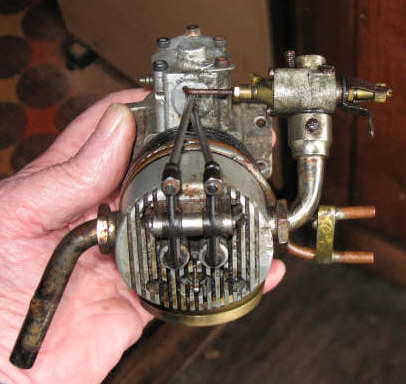
British modellers from late last century may find something familiar about this one. The photos above show it as received and you don't have to be Einstein to figure out that the water cooling is not original. But then, is the engine a commercial job, or a well executed one-off?
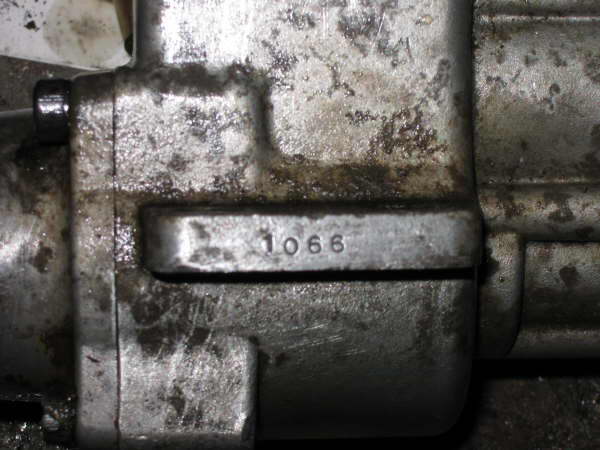 The only mark on the engine is "1066" stamped onto one of the engine lugs and to save you some searching, the engine is no kind of 1066 Products offering and we can conclude that this is a serial number, indicating that the engine is more likely commercial than not.
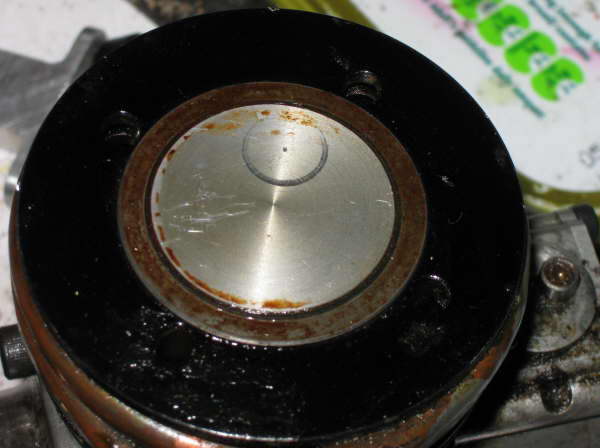 Tearing down the engine for a general clean-up discloses an interesting item that has no bearing on identification: the exhaust valve has been hammering away at the piston, or vice-versa. This would be due to a too-light valve spring, perhaps coupled with an overly aggressive cam design that produces valve train acceleration the spring cannot damp. Incidentally, the bore measures 27mm (1.066") with a stroke of 26mm (1.024") for a displacement of 15cc (0.91 cuin), strongly suggesting a non-US origin.
Got it yet? Motor Boys Vincent Chai, Eric Offen, Ken Croft, and Les Stone all called it right off. Click the button below to uncover the answer.
The Answer:
Our marinated watzit looks very much like an air-cooled Magnum 91S, made in Britain in 1981. The pictures below were supplied by Les Stone who even managed to produce an actual unmachined crankcase, complete with the cast-in name missing from our Watzit. The engine is somewhat historic being the first of the new generation of big four-strokes.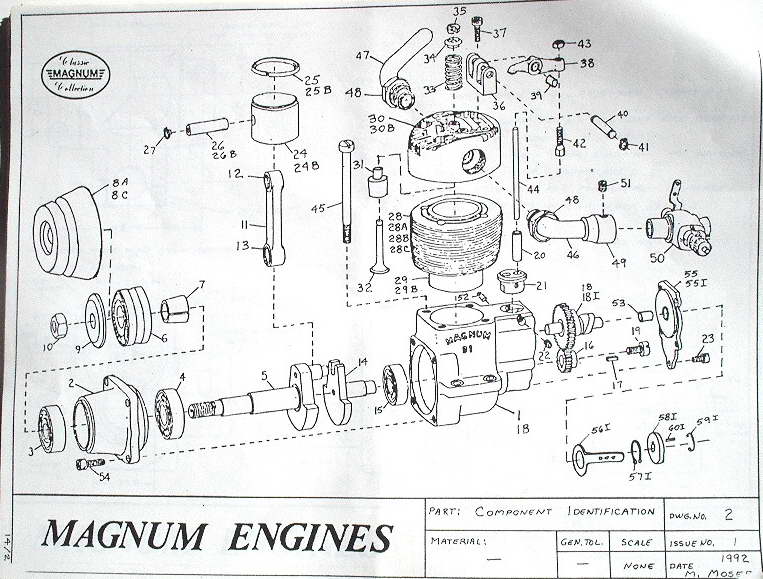 |
 |
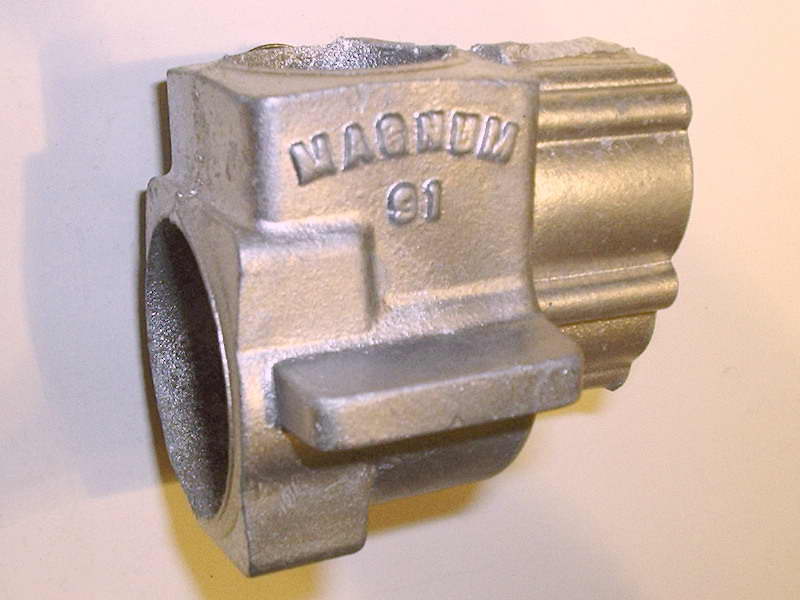 |
The only question remaining was why the name had been so carefully expunged from tha case on Malcolm's engine? Just days after this item went live on the web, the answer arrived from Thomas Ghisler who lives in Switzerland.
 |
 |
Our watzit is not an actual Magnum! It was sold under the Name 'Powermax' by the German company, KRICK Modelltechnik, during the 1980's. Their advertisement in the above photo was supplied by Thomas, together with a very well arranged and backlit photo of his Magnum 91S and Powermax. There are differences between the two engines and it is highly doubtful they came from the same factory. The most obvious differences are:
- The missing MAGNUM 91
- Only 8 cooling fins instead of 10 at the Magnum
- Silver head instead of black
- Different carburettor
So it is probably wrong to identify the engine as a Magnum, although it is a Magnum reproduction, of sorts. We really should have noticed points 2 and 3, and thank Thomas for pointing them out and supplying the full and complete (and final) answer.
G&G
 |
 |
 |
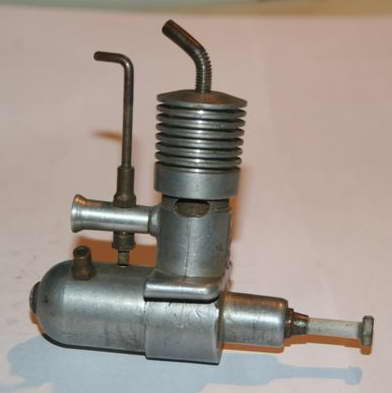 |
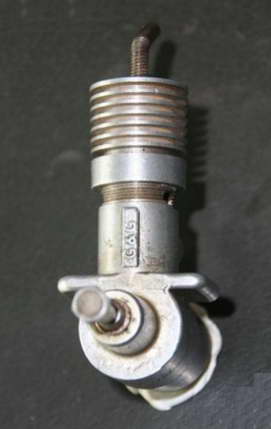
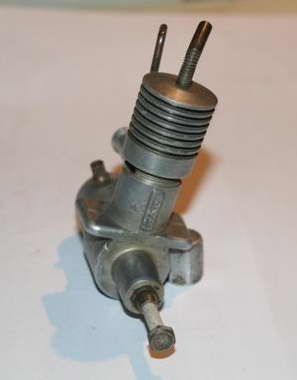
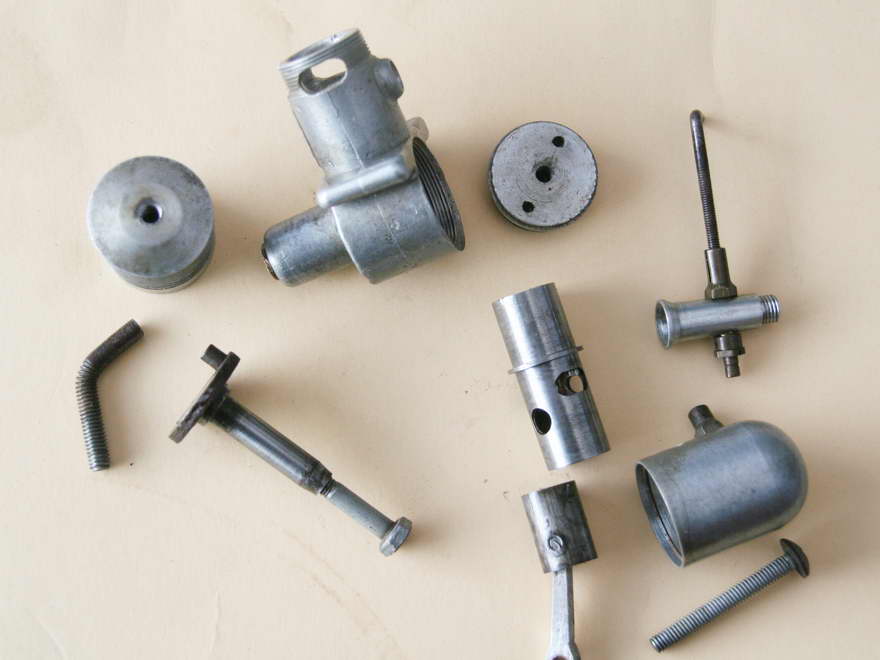
The letters cast onto the front of the cylinder say "G&G", but we don't have much to go on beyond that. Size-wise, it has a bore and stroke of 0.475" and 0.775" respectively, giving a displacement of 2.25cc (0.137 cuin). Judging from the photo, the case and venturi appear to be die cast, while the tank is either spun, or another nice casting. All this argues for a "production" engine—although talented amateurs are certainly not averse to making dies for a one-off job! Note the tiny circlips retaining the wrist pin (nice) and the way the comp screw has been bent from a cut off straight shank bolt (not nice extreme). We can only guess at the missing prop drive washer. Both the comp screw and prop bolt are 2BA, or possibly 10-32 as these are virtually interchangable at 75% engagement, despite BA being a 47.5° included angle thread and 10-32 being 60°. The tank bolt is 8-32 which has no BA equivalent, but the venturi thread is 0BA, which has no NC/NF equivalent! BA threads generally argue for the country of origin being either England, Australia, or South Africa (with Canada as a distant fourth possibility).
Clanford's does show one of the "GHG" range of engines which bears a superficial resemblance to our watzit, but it's certainly not the engine pictured there (p87). From the non-standard displacement, mixture of threads, and blinding dichotomy in the attention to detail department, I tend to lean towards this being a one-off home-built, but I've been wrong once or twice before. The engine currently resides in South Africa. If you can help us help the owner to ID it, drop an email to the address at the bottom of this page.
Nice repair, but what is it?
 |
 |
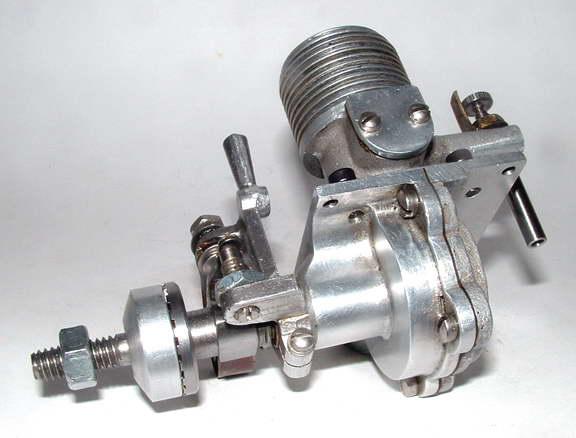 |
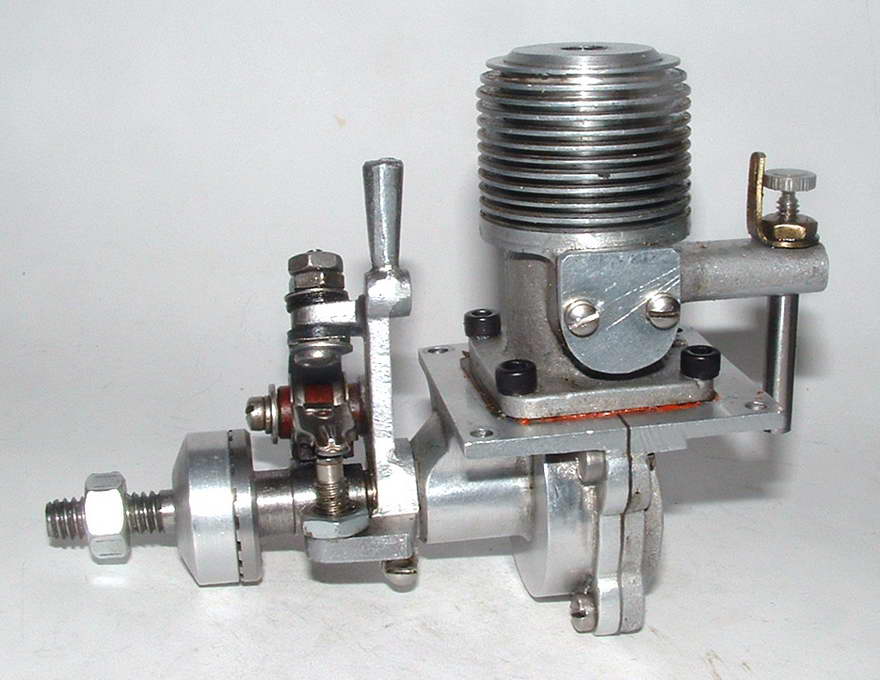
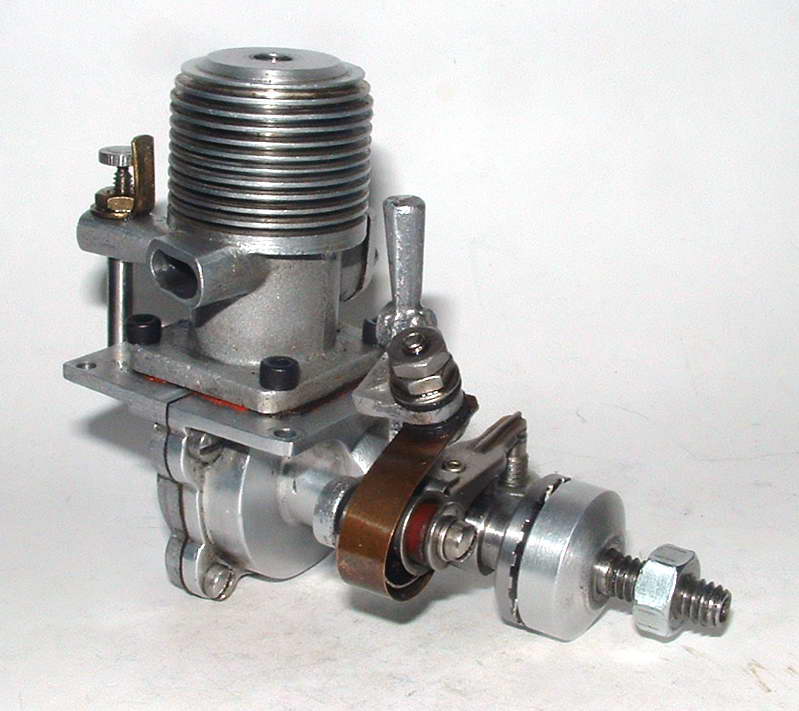
This old sparkie was loaned to ECJ editor, Tim Dannels in the hopes he might be able to help the owner find out more about it. So Tim circulated the photos to the Motor Boys, who quickly decided we didn't have a clue. We rather doubt that it is a commercial product, but it is nicely made, although a bit "delicate" as evidenced by the front section of the crankcase which is a nicely made replacement to the original casting, hogged from solid aluminium.
 |
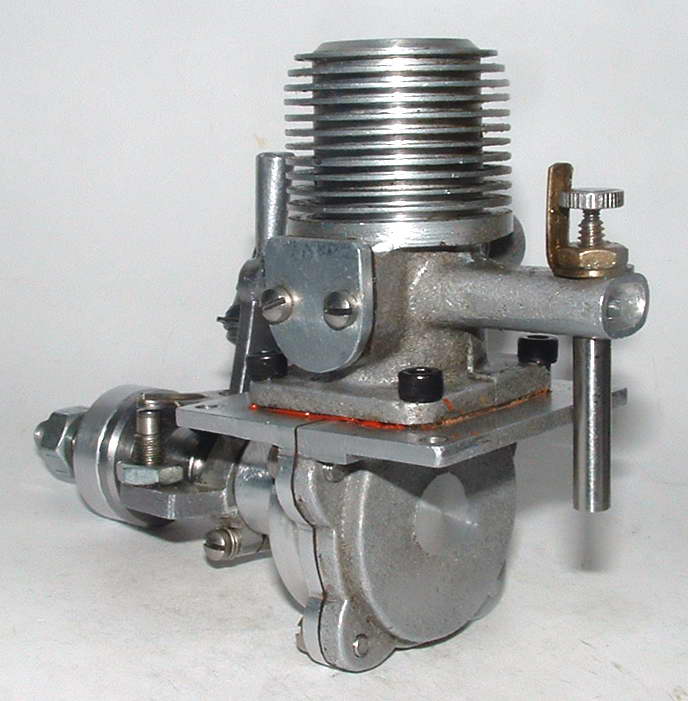 |
Strangely, after doing such a great job on the replacement part, the head casting has been reassembled using socket head machine screws that are so out of place, one wants to scream. Note also the heroic prop washer, possibly to compensate for lack of threaded length on the shaft when the engine is fitted with a low pitch prop. Tim Says it has a bore of 0.620" and a stroke of 0.780" for a displacement of 0.23 cuin. It has a single compression ring and turns a 8x6 Master Airscrew paint-stirer at 8,250 rpm. If anyone can help with provenance, please let us know.
Not-A-Pfeffer
 |
 |
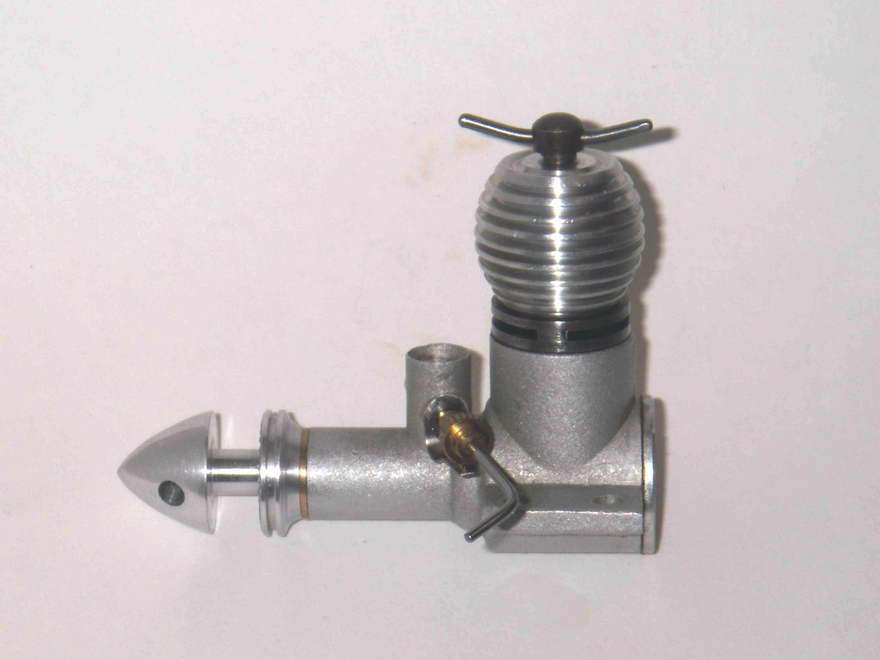 |
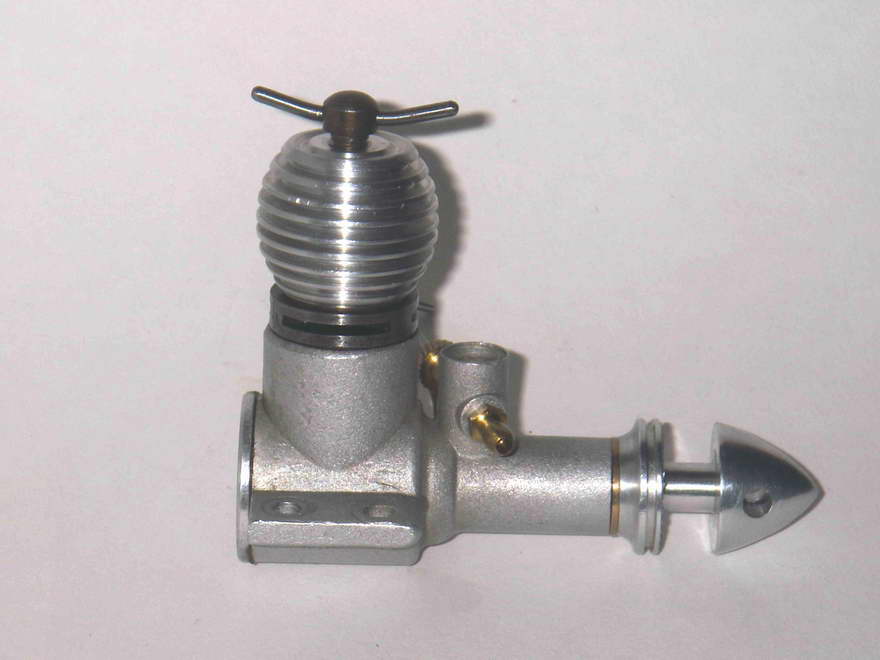
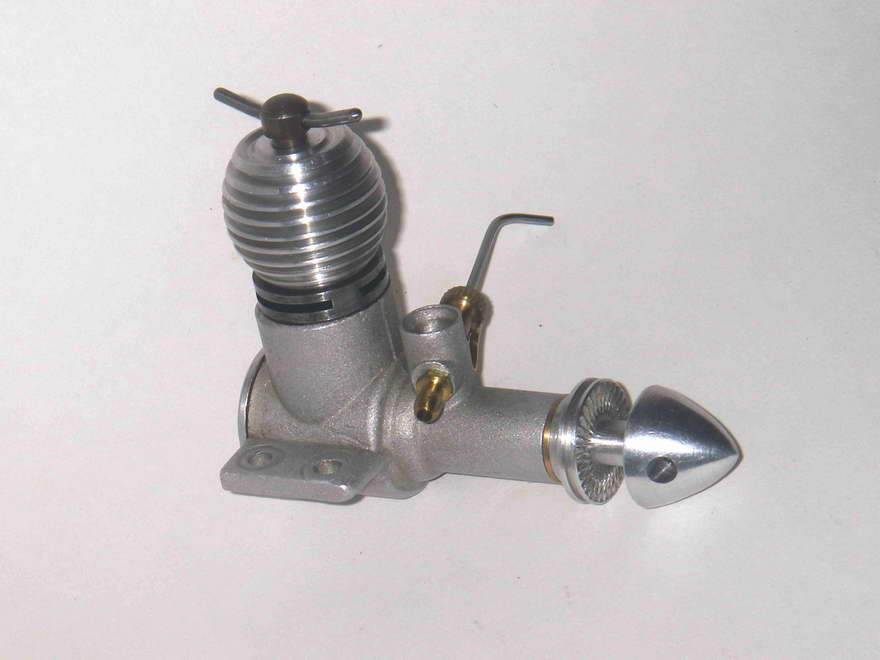
About all that can be stated with certainty about this one is that it is not a Pfeffer (now this, is a Pfeffer!) The engine has a bore and stroke of 12.3mm and 12.5mm respectively, for a displacement of 1.49 cc. As received, it had no needle valve, so the owner has added a Webra NVA; don't be fooled by it. He also added the bronze spacer behind the prop driver to prevent the rear of the crankpin from contacting the backplate. Otherwise, it's complete, original and in very nice condition. It's reported to start and run very well, albeit not with any great power. We know it is of Continental orign, and while our Czech authorities were positively able to tell us what it's not, they could not say what it is, so any clues welcome.
Whocastit?
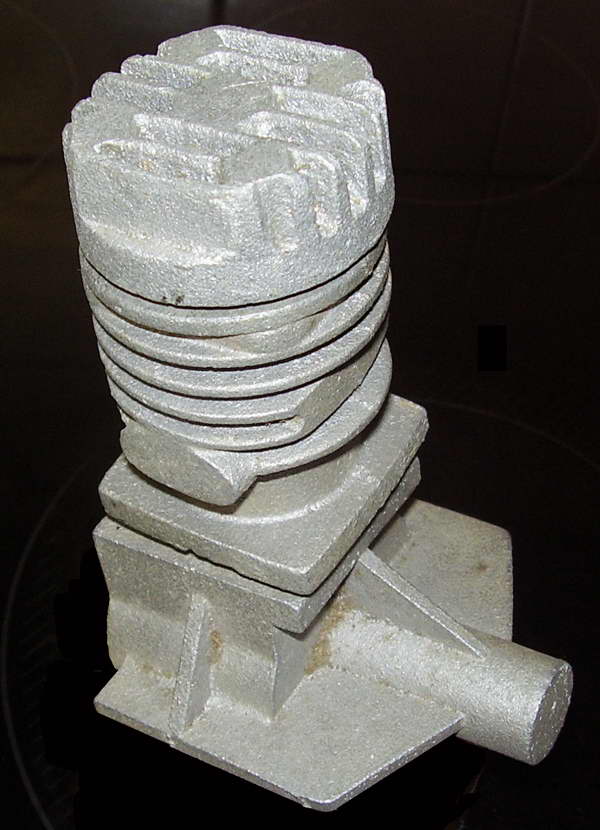 |
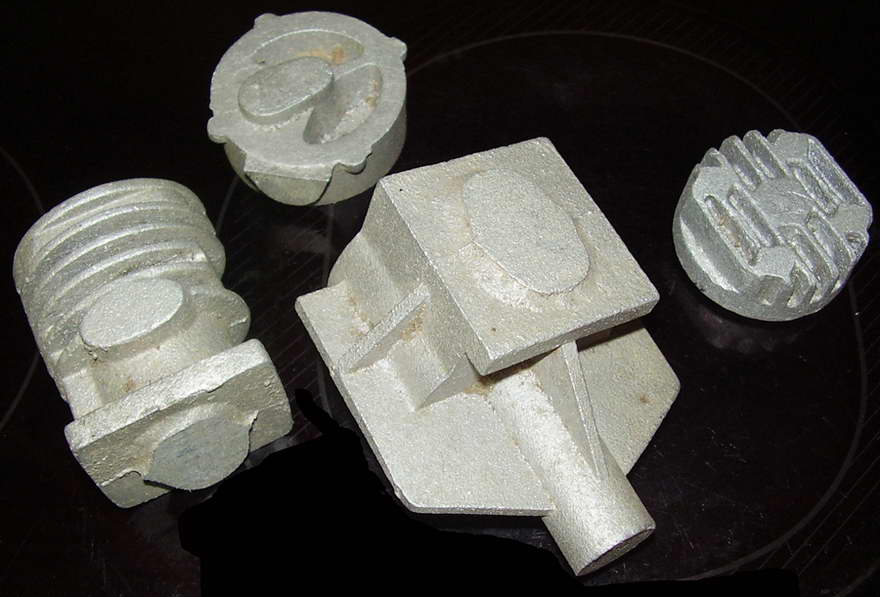 |
We don't know what it is, but if we knew Who Cast It, it would be a start! This one was sent in by a reader who is the new, proud owner. As is not uncommon with such acquisitions, there are no plans, nor data on what it might be. This is not a small engine. The cylinder base is 45mm square and the fins measure 50mm in diameter. The main crankcase diameter is 54mm (divide by 25.4 for Imperial sizes). An interresting feature is the provision for a venturi on the backplate to give Rear Rotary Valve (RRV) induction, and a flat on cylinder 90° from the exhaust that could be used to mount a side-port inlet. The unusual orientation of the cylinder with the bypass to the rear was done for the photo as being the only way the bits would stand up on their own! Normally, the bypass would be to the front to provide minimum obstruction to the gas flow. If anyone recognizes the work, or the design, please let us know.
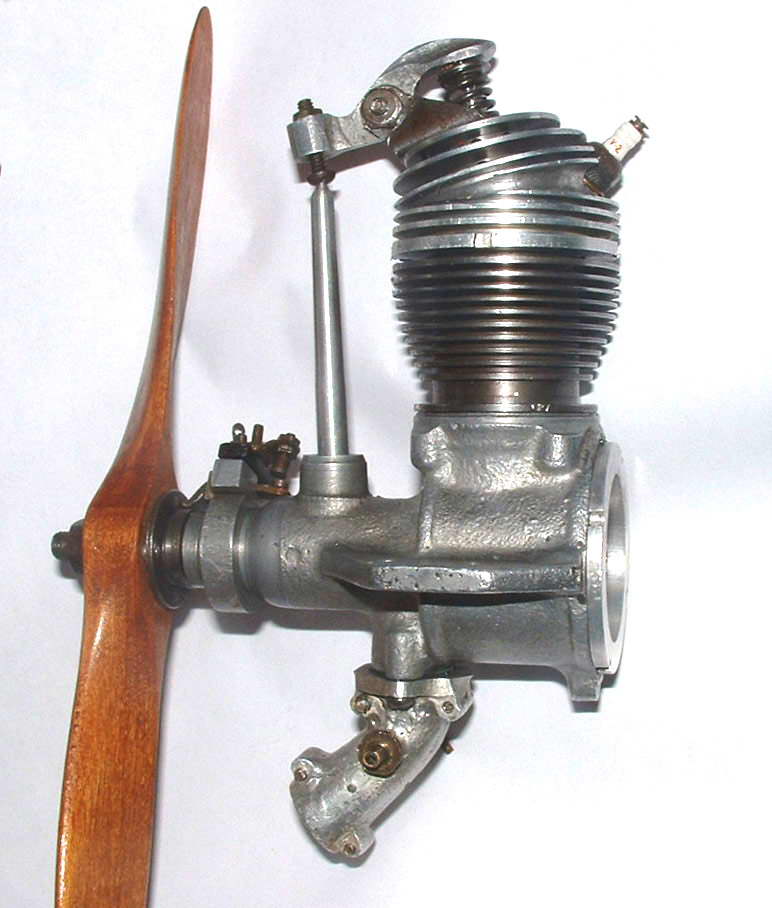
Novel Idea
 |
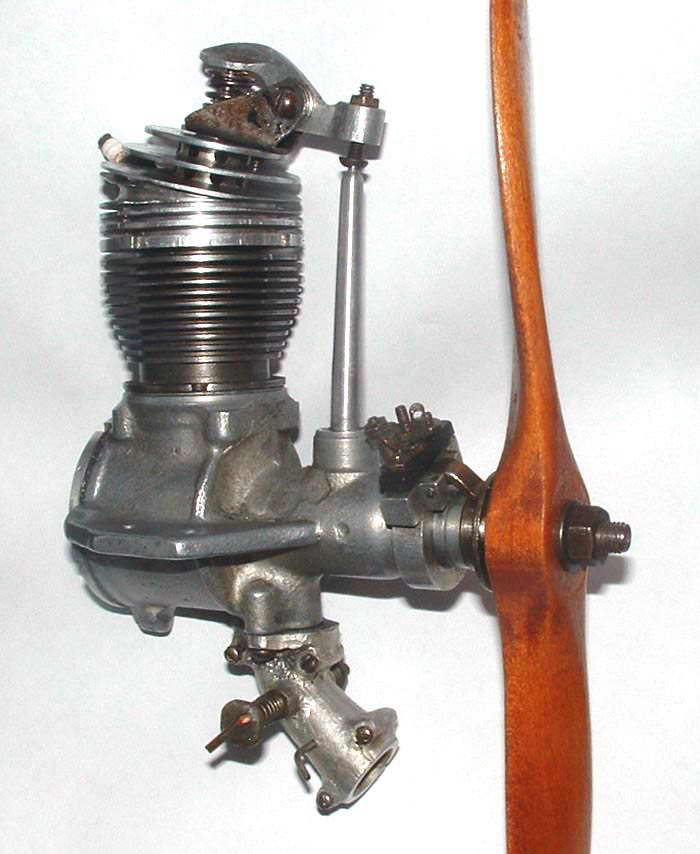 |
This Watzit is a glorious exercise in adding unnecessary complexity to a simple problem that already has an optimal solution—all of which does not stop it from being an interesting and intriguing engine. At first glance, it may look like a four-stroke, but it is in fact a not-so-simple two-stroke with features added that would seem to indicate that the unknown designer/builder was looking to improve scavenging efficiency.
The updraft "split" carby body is distinctive and appears to be fitted with a butterfly choke/throttle. Induction could be via a conventional front rotary crankshaft valve (FRV). I say "could" because the inlet is positioned very close to where the crankweb would be, so it is possible that the crank web itself is being used as a rotary valve like the Westbury Kestrel, and such an arrangement requires an updraft inlet to position the inlet opening where the crankpin is not!
The exhaust uses a poppet valve actuated by a crankshaft actuated cam and pushrod (as the engine is a two-stroke, no gearing is required). The exhaust outlet is via the rather restrictively small holes drilled around the forward leaning valve cage. Transfer is accomplished through an automatic valve in the piston, like the M&M 29, or the Atom designs. The standard of the machining appears good, although the work is rather let down by the very crude, folded sheet metal rocker pivot bracket and tappet adjusting screw.
Presumable the designer's idea was that the cam actuated poppet valve would open some time after TDC, exhausting from the top of the cylinder until pressure had decreased to a point where primary compression forced the in-piston valve open. The fresh charge would then assist in pushing out more of the burnt mixture with the exhaust valve closing before the new mixture reached the top of the cylinder.
The sand castings used are a fair example of the art, though note that the crankcase has unused bosses for cylinder hold-down screws. The split carby could merely be a way of producing a bend in the inlet tract without having to worry about coring.
All in all, complex, and probably not too powerful, but a worthy exercise in increasing the fuel economy and reducing exhaust emissions, although the spark ignition argues for the design harking back to the 1930s/40s when such considerations would not have been of great concern, if they figured at all! The engine was "found" in the USA and the threads used are US NC/NF, so while we can reasonably say where and when, there remains the who. It would also be informative to discover whether testing showed any measurable improvement in fuel consumption compared to standard model two-stroke practice. As usual, anyone with more information can email us.
BH Cub
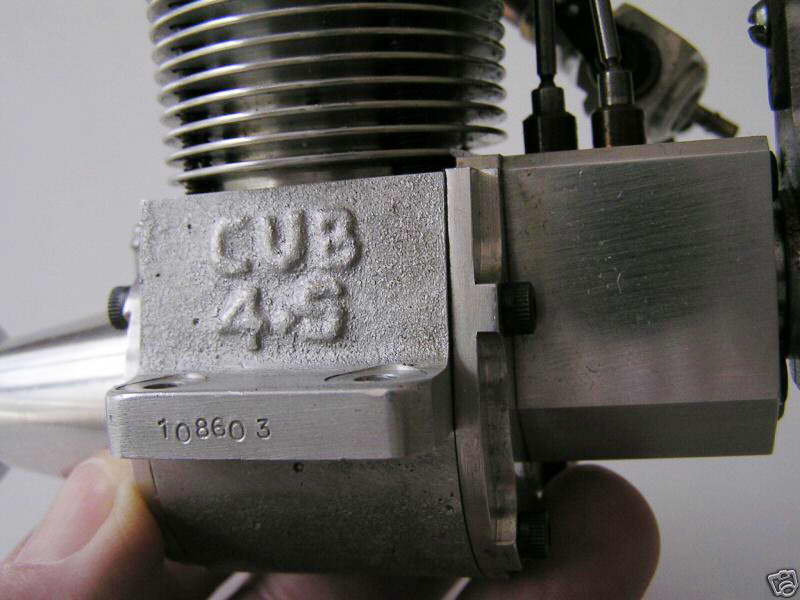
Now you could ask, with some justification, just what is the point in having a Watzit when you start out by telling everyone what it is? From the letters cast into the case, it's a "BH Cub". But who, or what, was "BH" and how many of these were made?
 |
 |
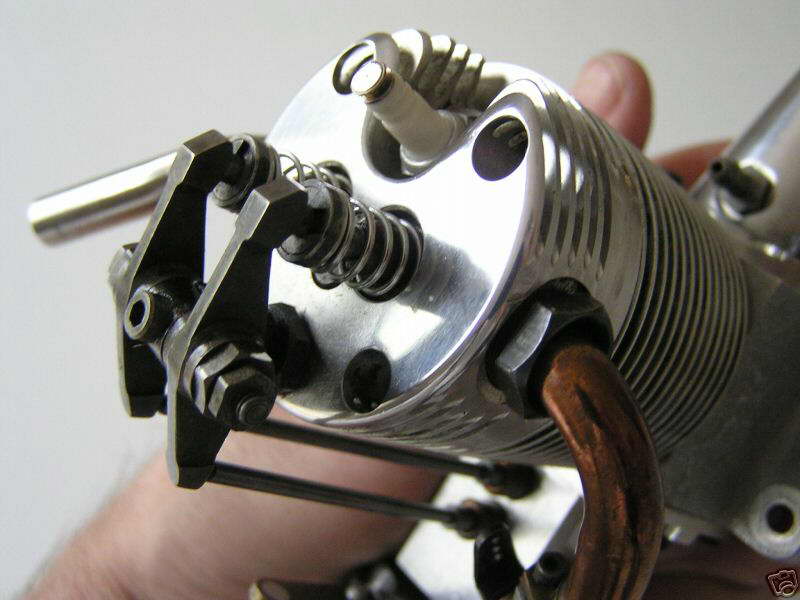 |
By observation, it is a spark ignition, overhead valve, four-stroke based on a simple sand-cast crankcase. We don't know the capacity. It might be 4.5cc, but that designation below the "CUB" looks more like "4.S" for "Four Stroke" to me. The new owner has been told that perhaps ten or more were made, but nobody seems to know by whom, or if this is true. Let us know if you can shed some light.
Diesel Clacker
 |
 |
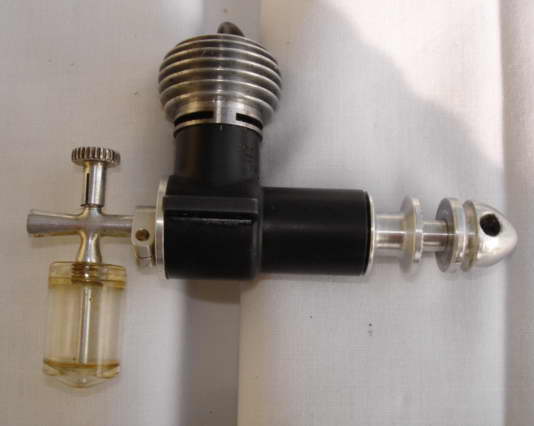 |
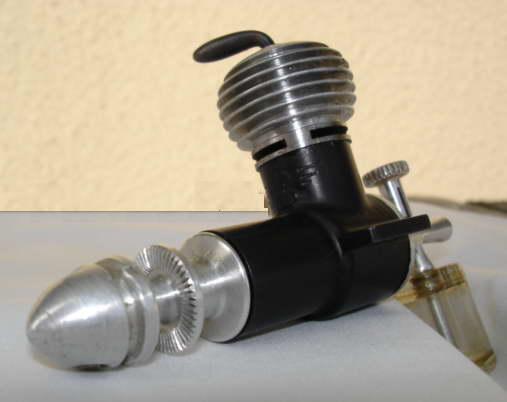
 We've had the "BH", now for the "HB". This is a very nicely made twin ball-race (TBR) diesel that we believe to be about .049 cuin displacement. Let me explain: many of our Watzit photos come from engine collectors and enthusiasts who, for lack of accurate measuring devices, disassembly tools, or an understandable reluctance and trepidation to pull the thing apart, cannot provide precise details, so we go on educated guesses. The crankcase has a finely engraved logo which is hard to photograph due to the black finish that may, or may not have been produced by anodizing. The owner has reproduced it in the drawing seen here.
The inlet is of the type we call a "clack valve"—that is, a free floating, or spring loaded disk intended to move back and forth under crankcase pressure demand rather than flex and flutter like a reed valve. The liner and piston are steel, the latter having a bevelled edge with a flat top and conventional wrist pin. The transfer ports are milled into the liner walls, Elfin style. The rear ball race is Hoffman; the front ball race has no visible marking. The crankshaft is fabricated. If the engine is European in origin, the "HB" may stand for Helmut Bernhardt, although the prop nut (which has a threaded brass insert) and venturi clamp strongly suggest a builder with an Amco .87 fixation. If anyone can give a positive ID to this one, please email us through enquiries (at) model engine news.
Yet Another Cox Twin-hack
 |
 |
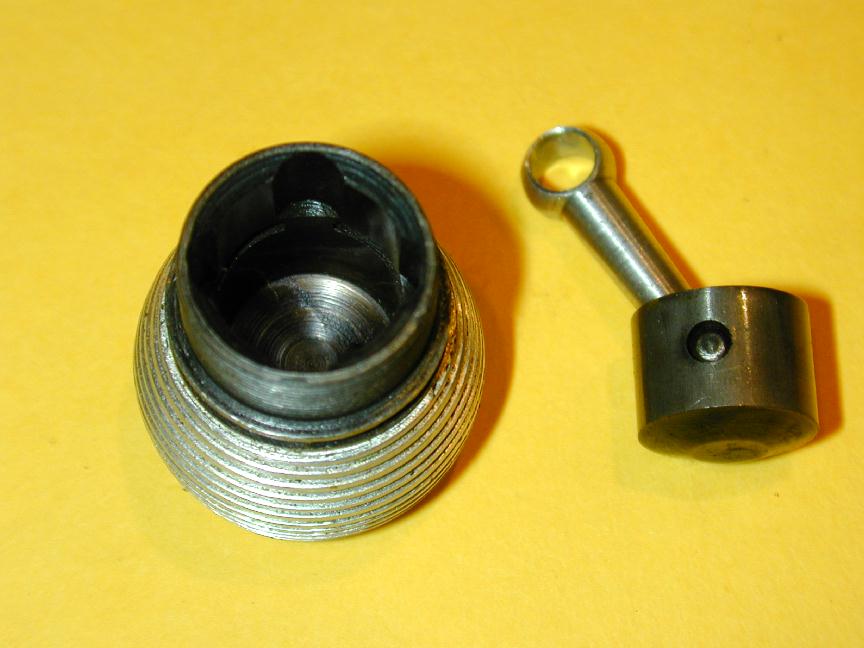
The obvious thing about this one is the Cox 049 heritage. Not so obvious is how the unknown designer intended to time the inlet, or fabricate the crankshaft. The center bushing appears to be split (note the ends of two filed off screws visible either side). This would allow a Taplin Twin-like spool to be fitted, with a separate crank running in the front case bush. The greatest advantage of this arrangement in a twin being the ability to use conventional, one-piece conrods. If this was the plan, the rear facing crank journal would need to be closed off to preserve crankcase compression, but that is a minor detail compared to the next problem.

The intended plan for the inlet valve is less obvious. The channel filed in the "top" of the center bush provides a permanent, uninterrupted path from the central TeeDee venturi via the hole in the top of the case halves. The plan might have been to fit a reed valve in the inlet, somehow, although it is perhaps more likely that the intent was to cut inlet ports in the crankwebs and rely on a close fit of the webs in the center bush for primary compression.
The current owner would like to see it finished, but does not have the equipment, nor the machining experience required. If you happen to know anything about this Cox-hack, please drop us a line.
Canadian Conundrum
These photos come from Adrian Duncan's extensive collection and it is the collection that's Canadian, almost certainly not the engine. At first, we had absolutely no idea where it came from, who made it, nor when, although the mystery was subsequently solved by Adrian himself.
 |
 |
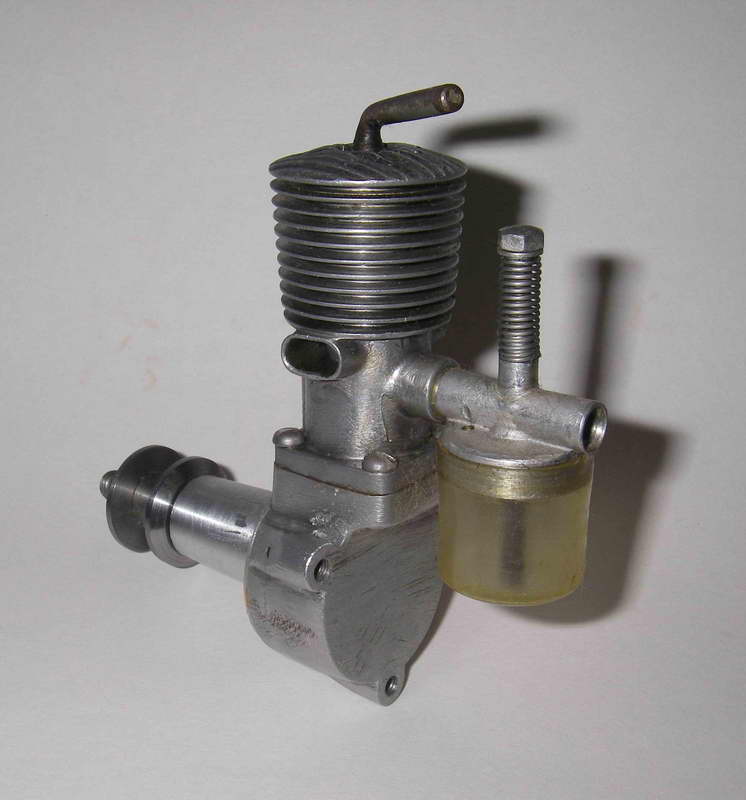 |
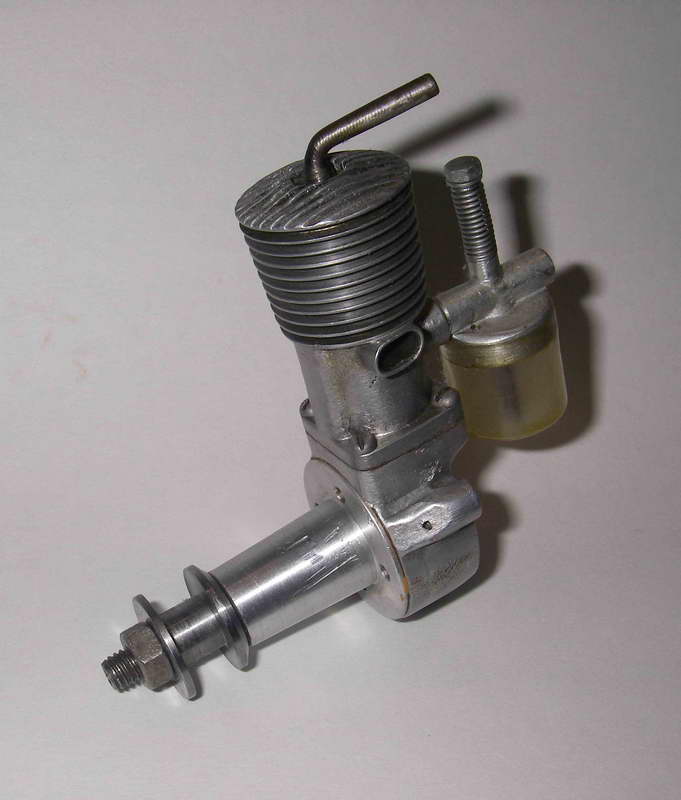
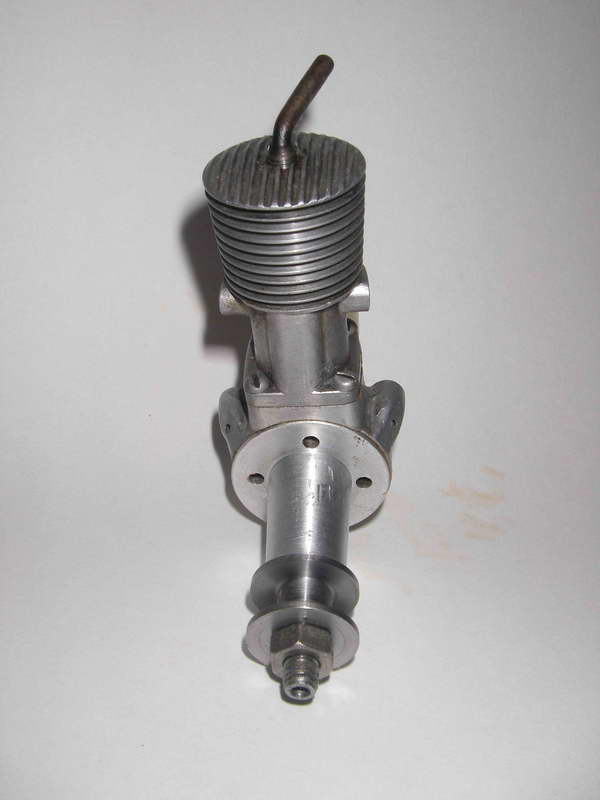
Study of the photographs shows that rather well made, finely detailed die castings have been used, even if a heavy hand and a coarse file seem to have been applied to the crankcase. The cylinder head is one piece with a "blind bore". Adrian reports that the cylinder liner actually appears to be shrunk or cast into the upper casting as even though there is nothing holding it in place, it does not want to move. The conrod is steel and the contra piston is aluminium—this latter feature being not uncommon for Continental "diesels", but unusual elsewhere. Mounting is radial only. Most inconveniently, the three mounting holes are tapped (metric) and the mount bolts have to be inserted from the rear! Not fun in most models.
The measured bore and stroke are 12.00mm x 17.90mm for a nominal capacity of 2cc. There are no identifying marks, and no sign of a serial number. When this engine was first added to the Watzits, we felt that it possessed a certain Czech air to it. This has since been confirmed, although there is considerable more to the story than a mere country of origin. Click Here for the amazing background to this engine.